


AI Everywhere, Confusion Everywhere Too
If you work in marketing in 2025, you can’t go a day without hearing about AI. It’s in every webinar headline, every LinkedIn post, every email pitch landing in your inbox. “AI-first analytics.” “AI-powered funnel builders.” “AI copywriters.” Every tool claims it will revolutionize your business.
For most business owners and even seasoned marketers, it’s overwhelming. Which tool is actually worth the money? Which one will vanish in six months? And how do you tell the difference between a real breakthrough and a shiny distraction?
The truth is, AI is exciting — but it’s also exhausting. Too many businesses are rushing to adopt AI without asking the most important question: does this fit our strategy?
I’ve seen this before. I watched “automation” take over the conversation in the early 2010s. I watched “growth hacking” dominate the mid-2010s. In every case, the businesses that won weren’t the ones that jumped on every new buzzword. They were the ones that applied common sense.
That’s what this article is about. Not another hype piece. Not another list of tools. This is about where AI fits, where it fails, and why in 2025 and 2026, common sense is more valuable than ever.
I laid the foundation for this in Bringing Back Common Sense to Digital Marketing in the Age of AI. The message hasn’t changed. If anything, it matters more now.

The Hype Problem: When Tools Outpace Strategy
Every week, a new AI platform hits the market. Some are impressive. Some are half-baked. Most of them promise more than they can deliver. And too often, teams dive in without first asking if the tool matches their strategy.
I’ve seen clients push hard to buy AI chatbots before they had a working lead nurturing process. They thought a piece of software would fix their funnel. But all the chatbot did was highlight the fact that the funnel was broken in the first place. That’s not an AI problem — that’s a strategy problem.
This isn’t new. In the 2010s, “growth hacking” became the buzzword. Everyone wanted the “one trick” that would blow up their user base. I watched companies chase hacks instead of building systems. Some got lucky for a few months. Most burned out.
The pattern hasn’t changed. Right now, too many companies believe AI itself will save them. But tools don’t save you. Tools amplify what you already have. If your strategy is weak, AI just makes your weaknesses louder.

What AI Is Actually Good At in Marketing
Let’s not throw the baby out with the bathwater. AI is powerful when used where it fits best.
It excels at:
- Data analysis at scale. AI can sift through patterns no human analyst has time for.
- Automating repetitive tasks. Pulling reports, drafting subject line variations, A/B testing copy.
- Personalization at speed. Creating content variations and recommendations in real time.
I’ve seen the impact directly. In one case, my team used AI to automate reporting that used to take half a day every week. Suddenly, those hours were freed for actual strategy work. That’s not hype — that’s practical.
But even here, AI needs direction. It can crunch numbers, but it doesn’t know which numbers matter to your business. Humans still have to set the priorities and make the calls.
I explored this in Agentic Personalization: The Future of Smart Cross-Channel Marketing Orchestration. The power isn’t in AI doing everything for you. The power is in combining speed with human insight.

What AI Still Fails At: Humanity, Trust, Story
AI can generate. But it can’t feel. And that matters more than most marketers want to admit.
Storytelling, empathy, and lived experience don’t come from a dataset. They come from people. AI can remix words, but it can’t replace memory or meaning.
When I write ad copy for a clinic, I’m not just stringing together words. I’m remembering the frustration in a parent’s voice when they couldn’t get help for their child. I’m channeling the hope they felt when they finally did. That’s not something AI can fake.
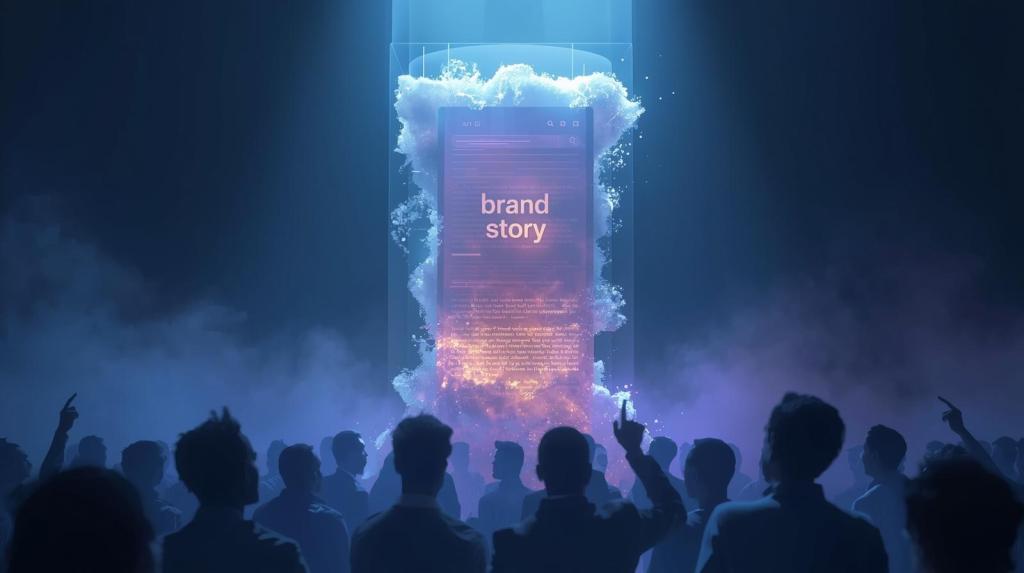
I wrote about this in Why Storytelling is the Secret Weapon in Modern Marketing. Stories cut through where tactics fail. And in a world where AI can mass-produce bland content, a real story becomes even more valuable.
Trust works the same way. People don’t trust faceless outputs. They trust brands that show humanity. AI won’t change that.

Blending AI with Human Insight (Not Either/Or)
The strongest teams I’ve led weren’t anti-AI. They weren’t blindly pro-AI either. They were balanced.
We used AI to handle the grunt work — drafting, pulling data, creating variations. But humans made the final call. Humans set the strategy, chose the story, and caught the details AI missed.
When I trained ad specialists, I told them: the automation is your assistant, not your boss. It can give you ideas. It can handle the scale. But only you can decide which variation feels right, which headline actually connects, which audience is worth pursuing.
The common sense approach is this: let AI make you faster, but never let it make you lazy.

AI in Paid Ads: Smarter Bidding, But Still Needs Oversight
Paid ads are one of the clearest places AI is already running the show. Google and Meta both rely heavily on AI bidding.
On the good side, AI can analyze signals no human could. It finds micro-patterns in behavior that would take us months to spot. It optimizes in real time.
On the bad side, AI sometimes optimizes for the wrong thing. I’ve seen campaigns where AI chased clicks instead of conversions, burning through budget while celebrating the wrong metric.
I’ve managed over $5 million per month in ad spend. At that scale, AI is invaluable — but oversight is non-negotiable. Without a human watching the results, AI will happily waste money on the wrong audience.
I broke this down in The Future of Paid Ads: How AI is Transforming Google Ads, Facebook Ads, and Beyond. The takeaway is simple: AI can be your sharpest tool, but only if you’re holding the handle.
AI in SEO: Search Changing, But Authority Still Human
Search is shifting faster than ever. Google’s Search Generative Experience is rewriting queries into summaries. Platforms like Perplexity give conversational answers without sending clicks anywhere.
What does that mean? Fewer clicks overall. Less traffic flowing from the old blue links.
But here’s the key: AI-powered search leans heavily on authority and trust. Brands that consistently publish credible, story-rich content are the ones AI tools surface.
This is why storytelling ties directly into SEO. Stories create authority. They get cited. They get mentioned even without links.
I wrote about the importance of what happens after the click in Beyond the Click: Mastering Post-Click Optimization for Higher Conversions. And I tackled trust directly in From Zero-Party Data to Growth: Building Trust in the Cookieless Era. Both connect here.
SEO in 2025 isn’t about chasing keywords. It’s about becoming the story people — and algorithms — can’t ignore.

Ethics & Security: AI Without Guardrails Is Dangerous
AI is powerful. But without guardrails, it’s dangerous.
I’ve seen businesses rush to plug AI into their operations without thinking about compliance, privacy, or bias. In healthcare and finance, that’s not just sloppy — it’s a liability.
AI doesn’t understand context. It doesn’t know the difference between helpful and harmful if you don’t train it carefully. And the data you feed it? That data can leak.
I wrote about these issues in AI Ethics and Security: Balancing Innovation with Responsible AI Use and Securing the Future: How to Protect Sensitive Data in the Age of Generative AI. Both posts point to the same truth: innovation without responsibility is a ticking time bomb.
Common sense here isn’t optional. It’s survival.

Common Sense Framework: How to Judge AI Tools in 2025–2026
Here’s where I get practical. If you want to know whether an AI tool is worth your time, use this simple framework:
- Problem fit. Does this solve a real problem you have, or just look shiny?
- Integration. Will it work with your systems, or create another silo?
- Efficiency vs. quality. Does it save time without hurting outcomes?
- Data trust. Do you trust the vendor with sensitive data?
- Human oversight. Who on your team will check the outputs before they go live?
I use this exact checklist when evaluating tools. I start small, pilot with a single project, and measure real impact. If it doesn’t deliver, I cut it. No matter how slick the pitch deck looked.
This section is meant to be actionable. Save it. Share it. Use it. It’s how you keep from drowning in hype.

Closing: AI Won’t Replace Marketers Who Think
There’s a lot of fear right now. “AI will take our jobs.” “AI will replace marketing.”
Here’s my take: AI will replace tasks. It will replace some grunt work. But it won’t replace thinking. It won’t replace creativity. It won’t replace vision.
In 2025 and 2026, the marketers who win won’t be the ones chasing every new AI tool. They’ll be the ones using AI to amplify human insight, strategy, and story.
The line I’ll leave you with is this:
“AI doesn’t replace common sense — it makes common sense more valuable than ever.”


 Marketing Unplugged
Leave a reply to 2025 Was a Reset: What Still Works in Marketing, What Doesn’t, and How to Plan for 2026 – Marketing Unplugged Cancel reply