
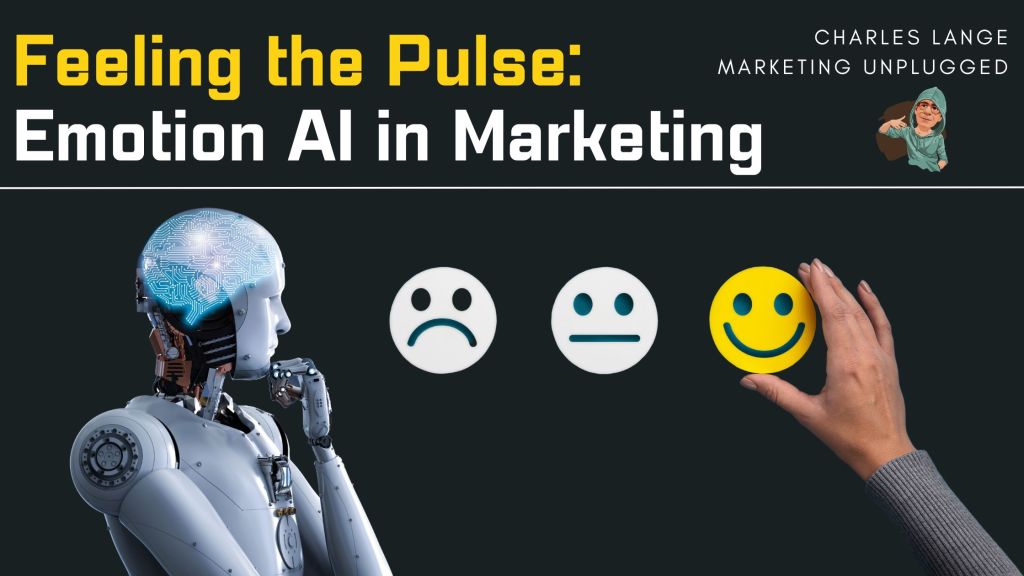

In the constantly evolving world of marketing, keeping a finger on the pulse of your audience’s feelings is more than just a nice-to-have—it’s become a must-have. After all, we’re all humans, wired with a complex network of emotions that guide our decisions. Whether we realize it or not, our feelings play a massive role in everything we do, including the purchases we make. So, wouldn’t it be something if your business could tap into these emotional undercurrents, effectively reading your audience’s emotions? Welcome to the reality of Emotion AI.
This is no sci-fi fairy tale, folks. Emotion AI, or Affective Computing as the tech gurus call it, has turned the pipe dream of ‘feeling machines’ into a solid reality. Suddenly, we’ve got a powerful tool that can recognize, interpret, process, and simulate human emotions. Sounds like some sort of superpower, right? You bet, especially when we bring it into the marketing arena. Buckle up as we embark on a thrilling journey into the world of Emotion AI and its profound impact on marketing. Let’s dive in, shall we?
Decoding Emotions: Understanding Emotion AI
So, let’s pause for a moment and really sink our teeth into what Emotion AI is all about. Picture this: it’s like a friend who can tell if you’re feeling blue even when you’re sporting a wide grin. Only this ‘friend’ is a machine, and it’s using data—lots and lots of it—to make these emotional assessments.
At its heart, Emotion AI, or affective computing as some prefer to call it, is all about teaching machines to recognize and understand human emotions. How do they do that, you ask? Well, it’s a combination of advanced algorithms, massive data sets, and machine learning. These AI systems analyze various signals from us humans—facial expressions, vocal nuances, body language, even text in our social media posts—to identify and interpret our emotional states.
One moment, an Emotion AI system might be analyzing your facial expression during a video call, picking up on the subtlest hints of amusement or confusion. The next, it could be scanning through lines of text, gauging the sentiment behind your words. From joy and surprise to sadness and anger, Emotion AI seeks to comprehend the full spectrum of human emotions.
But what’s the point of all this, you ask? That’s where things get really interesting. Emotion AI opens up a whole new dimension of understanding for businesses and marketers, offering an unprecedented level of insight into how people feel about their products, services, or even their brand as a whole. It’s like being given a direct line to your audience’s emotional landscape—a pretty exciting prospect, wouldn’t you agree?
Emotion AI and the Consumer: A Deeper Connection
Alright, let’s delve deeper into the heart of this discussion: the connection between Emotion AI and consumers. You might wonder, “Why should I care about a machine understanding my feelings?” Well, my friend, let’s unpack that.
Think about the last time you had a terrific customer experience. Maybe the product was fantastic, or perhaps the service was outstanding. But chances are, it was more than just that. It probably had something to do with how that experience made you feel. Valued? Understood? Excited? If a business can tap into that emotional reaction, well, they’ve struck gold.
Now, imagine a scenario where a business doesn’t just respond to your emotions—they anticipate them. That’s the power of Emotion AI. By analyzing your expressions, words, or actions, these systems can get a read on your feelings. And once a business understands your emotional state, it can tailor its response accordingly. If you’re frustrated, it can offer assistance; if you’re happy, it can share in your joy; if you’re considering a purchase, it can nudge you in the right direction.
But it’s not all about the here-and-now. Emotion AI also allows businesses to accumulate and analyze emotional data over time. This could help them identify patterns and trends in consumer sentiment, providing invaluable insights for future strategy and decision-making. So, it’s not just about reacting to emotions; it’s about understanding them, learning from them, and ultimately, building stronger, more meaningful relationships with customers.
Sounds pretty revolutionary, doesn’t it? That’s because it is. With Emotion AI, businesses aren’t just providing products or services; they’re forging deeper connections with their customers. And in a world where consumers are increasingly seeking authentic, personalized experiences, that’s a game-changer.
Emotion AI in Action: Practical Applications in Marketing
Buckle up, my friend, because we’re about to dive into the practical applications of Emotion AI in marketing, where science meets the creative mind. The blend is potent, and the outcomes are nothing short of impressive.
Let’s start with a biggie: customer experience. By analyzing customers’ emotional responses in real-time, brands can adapt their approach on the fly. Let’s say you’re scrolling through a company’s website, and you start to show signs of frustration—maybe you’re clicking around a lot or typing with more force. With Emotion AI, the company can pick up on this and adjust. They could, for instance, pop up a chatbot to offer assistance or streamline the page to make navigation easier.
Another intriguing application lies in market research. Traditional methods, like surveys and focus groups, rely on consumers to accurately report their feelings. But let’s be real—sometimes we’re not even sure what we’re feeling. Enter Emotion AI. By analyzing facial expressions, vocal nuances, and even physiological responses, it can pick up on the emotions that consumers might not express—or even realize they’re experiencing. This leads to a deeper, more accurate understanding of consumer sentiment, providing marketers with the kind of insights that surveys can only dream of.
And let’s not forget about advertising. We all know that successful ads tug at the heartstrings. But how can you be sure what will resonate with your audience? You guessed it: Emotion AI. By testing ads and analyzing viewers’ emotional responses, marketers can fine-tune their content to maximize impact. Maybe that joke didn’t land quite as well as you thought, or perhaps the heartfelt moment at the end really pulls at the tear ducts. Emotion AI provides the kind of feedback that helps transform good ads into great ones.
Finally, consider social media monitoring. Instead of merely counting likes and shares, Emotion AI can dig deeper, analyzing the sentiment behind comments and reactions to provide a richer understanding of how consumers are engaging with your brand.
These applications barely scratch the surface of what Emotion AI can do, and the possibilities are expanding daily. It’s a thrilling ride, and we’re still at the very beginning. So strap in, because it’s going to be quite a journey.
Case Study: Emotion AI Driving Success
Alright, it’s time to bring this tech talk down to earth with a real-world case study. Let’s chat about a company that harnessed the power of Emotion AI and turned it into tangible success. I’m talking about Unilever, one of the world’s leading suppliers of Beauty & Personal Care, Home Care, and Foods & Refreshment products.
So, here’s the scoop. Unilever wanted to understand the emotional impact of their advertisements. Of course, they could have stuck with traditional methods—like surveys or focus groups—but they decided to shake things up a bit. They turned to Emotion AI to get a more nuanced view of their audience’s reactions.
Using an Emotion AI platform, Unilever analyzed the facial expressions of consumers as they watched a series of advertisements. This wasn’t about whether viewers liked or disliked the ad—it was about the complex palette of emotions they experienced throughout. Were they engaged? Confused? Delighted? Bored?
What Unilever discovered was illuminating. They found that the most successful ads—the ones that drove sales and boosted brand sentiment—weren’t necessarily the ones that viewers claimed to like the most. Instead, they were the ones that sparked the most potent emotional responses. In some cases, ads that viewers found unsettling or challenging were the ones that resonated the most. It wasn’t about making viewers comfortable—it was about making them feel.
The implications were huge. It meant that Unilever could fine-tune their advertising strategies to prioritize emotional impact, rather than surface-level likeability. It meant they could take risks, challenge their audience, and break away from the pack. And it paid off. By leveraging Emotion AI, Unilever was able to craft more compelling, emotionally resonant advertisements that drove engagement and, ultimately, sales.
This case study is a powerful testament to what Emotion AI can do. It’s not about replacing traditional methods—it’s about enhancing them, adding a new layer of depth and insight that can truly transform marketing strategies. It’s a brave new world out there, folks, and Emotion AI is leading the charge.
Getting Started: How to Incorporate Emotion AI in Your Marketing Strategy
Alright, so you’re pumped about Emotion AI. You’re ready to put it to work, but you’re not quite sure how. Let’s break it down into a more detailed step-by-step guide, so you can go from curious observer to hands-on practitioner.
1. Identify your objectives: The first step is defining what you want to achieve with Emotion AI. Are you aiming to enhance customer engagement, improve ad performance, or provide more personalized experiences? Your objective will guide your Emotion AI strategy.
2. Understand your audience’s emotional landscape: Use existing data—customer feedback, social media comments, customer service transcripts—to identify key emotional triggers and patterns. What drives positive and negative sentiments towards your brand? What emotional responses do your products or campaigns elicit?
3. Choose the right Emotion AI tool: Once you’ve defined your goals and understood your audience, the next step is to choose the right Emotion AI tool. Some platforms focus on text analysis, others excel at interpreting facial expressions or voice tonality. Pick the one that aligns with your goals and audience.
4. Pilot test: Before fully integrating the tool, conduct a pilot test. Use it on a small scale—say, a single ad campaign or a subset of customer interactions—and measure the outcomes.
5. Analyze the results: Did the tool provide useful insights? Did those insights lead to actionable changes in your strategy? Were those changes effective? Don’t just focus on numbers—look at the qualitative impact, too.
6. Integrate into your workflow: If the pilot test is successful, gradually integrate the tool into your larger strategy. Ensure your team is trained on using the tool and interpreting its results.
7. Continuously evaluate and adjust: Emotion AI is not a set-it-and-forget-it solution. Regularly analyze the data it provides, adjust your strategy based on those insights, and evaluate the effectiveness of those adjustments.
8. Stay abreast of developments: Emotion AI, like all AI, is continually evolving. Stay updated on advancements and be prepared to adapt your approach.
This might seem daunting, but remember: The best way to eat an elephant is one bite at a time. Take it step by step, keep your eyes on your goals, and don’t be afraid to learn as you go. You’ve got this.
Navigating the Challenges: Ethical and Technical Hurdles in Emotion AI
Let’s go a bit deeper and chat about the speed bumps you might hit along this AI journey, alright? Nobody ever said that emotion AI was going to be a walk in the park, and like every technology, it has its fair share of challenges. Some of these challenges are technical, but perhaps the trickier ones to navigate are the ethical issues.
On the technical side of the equation, emotion AI is a complex beast. It’s still maturing, and while we’ve made massive strides, there’s always room for improvement. First, there’s the challenge of accuracy. Sure, AI has gotten pretty good at detecting emotions, but it’s not perfect. Misinterpretations happen. For instance, think of how often humans misread each other’s emotions, even with all our nuanced understanding of social cues. Now, imagine an AI trying to do the same.
Then there’s the question of context. Emotion isn’t always cut and dry – it’s often influenced by a multitude of factors that an AI might not be privy to. For example, a customer might express frustration not because of your product, but because they’re having a rough day. Without understanding the context, the AI might wrongly interpret this as negative sentiment towards your brand.
Now, let’s switch gears and talk about the ethical concerns. If I’m being honest with you, they’re substantial. At the top of the list is privacy. With emotion AI, you’re delving deep into personal territory, which could raise questions about surveillance and consent. Are your customers comfortable with their emotions being monitored and analyzed? Have they given their informed consent? These are the tough questions that businesses have to grapple with.
Additionally, there’s the risk of manipulation. With insights into a consumer’s emotions, a business has the power to influence decision-making in a way that some might see as manipulative. Balancing the use of emotion AI for business growth and maintaining ethical standards is like walking a tightrope.
And lastly, there’s bias. AI systems learn from the data they’re trained on, and if that data is biased, the AI will be too. This could lead to misinterpretations, especially when dealing with diverse populations.
The challenges are real, but they’re not insurmountable. With careful consideration, transparent practices, and a commitment to ongoing learning and adjustment, businesses can navigate these hurdles and harness the power of emotion AI responsibly and effectively. So, buckle up, my friend. It’s going to be one heck of a ride!
Gazing Ahead: The Future of Emotion AI in Marketing
Grab your binoculars, my friend, and let’s take a good long gander at what lies ahead on this wild, exciting frontier of emotion AI in marketing. We’re on the precipice of something big, and let me tell you, the view from here is nothing short of staggering.
First off, it’s worth stating outright that the future is incredibly bright for emotion AI in marketing. Just as mobile marketing was the ‘next big thing’ a decade ago, the same can be said for emotion AI today. And if you think we’ve seen a lot of growth and innovation already, hold onto your hats, because we’re just getting warmed up!
The tech is rapidly evolving and improving, and as it does, the scope of its application in marketing is broadening. We’re heading towards hyper-personalized marketing that doesn’t just target a customer based on demographic or behavioral data but tailors experiences to their emotional states as well. This means more meaningful interactions, more effective communication, and ultimately, stronger relationships between businesses and customers.
Imagine a world where customer service can immediately gauge a customer’s emotional state and adjust their approach accordingly. Or a content strategy so refined that it delivers the right message, in the right tone, at the right moment, for every individual customer. Sounds like a dream, right? Well, thanks to emotion AI, this dream is fast becoming a reality.
And as we look even further into the future, we could see emotion AI integrating more fully with other advanced technologies. Think virtual reality experiences that adapt based on your emotional responses or augmented reality ads that change in real-time based on your reaction. The possibilities are mind-blowing!
But let’s not get too carried away. The future of emotion AI is certainly exciting, but it’s also uncharted territory. As we push the boundaries of what’s possible, we must also ensure we’re navigating this space responsibly, ethically, and with a deep respect for privacy and consent.
So, my friend, as we stand here on the cusp of this brave new world, it’s clear that emotion AI is more than just the latest buzzword—it’s a game-changer. And while there will be challenges along the way, those willing to adapt, learn, and push the boundaries will be the ones who reap the rewards. So, are you ready for the journey? I know I am. Let’s dive in!
Conclusion
All right, my friend, we’ve reached the home stretch. We’ve trekked through the wilds of emotion AI, peeked behind the technological curtain, pondered its implications, and envisioned its future. We’ve laughed, we’ve learned, we’ve probably cried a bit (or was that just me?). But as we cross the finish line, let’s take a moment to reflect and tie up those loose ends.
Emotion AI is much more than a fancy tech term—it’s a powerful tool that can transform how we understand and engage with consumers. It offers the tantalizing prospect of hyper-personalized marketing that’s tailored not just to demographics or behaviors, but to emotional states as well. And while it’s still a relatively new field, the potential is vast, and the future—though still hazy in parts—is exciting.
But let’s not forget that with great power comes great responsibility. As marketers, as businesses, and as human beings, we must ensure that emotion AI is used ethically and responsibly. We must respect privacy, champion transparency, and always, always prioritize the needs and feelings of our consumers.
Now, to help you dive deeper into the world of emotion AI, I’ve pulled together a list of some of the top emotion AI tools and platforms currently available:
- Affectiva: Known as the pioneers of emotion AI, Affectiva offers a range of emotion recognition technology tools and solutions. Check them out at http://www.affectiva.com
- Beyond Verbal: They focus on analyzing vocal intonations to understand emotions and health conditions. Visit their site at http://www.beyondverbal.com
- Kairos: This platform uses facial recognition and emotion analysis to gather insightful data. See what they offer at http://www.kairos.com
- Emotibot: Known for its emotion detection capabilities in both text and voice, this is a great tool for customer service applications. Give them a look at http://www.emotibot.com
- Sensum: If you’re into understanding emotions in the real world (aka outside the lab), Sensum is the tool for you. Explore more at https://www.sensum.eu/
- Realeyes: They use webcams to analyze viewer’s emotional reactions to video content. You can find them at http://www.realeyesit.com
Remember, technology is only as good as the people using it. So whether you’re a marketing maven, a brand builder, or just someone with a dream and a whole lot of grit, take these tools and use them to create something amazing. Something meaningful. Something that adds real value to people’s lives. And as you do, remember the human element. Because in the end, marketing—like life—is all about connection.
Now, go forth and conquer, my friend. The world of emotion AI is waiting for you.


 Marketing Unplugged
Leave a Reply