
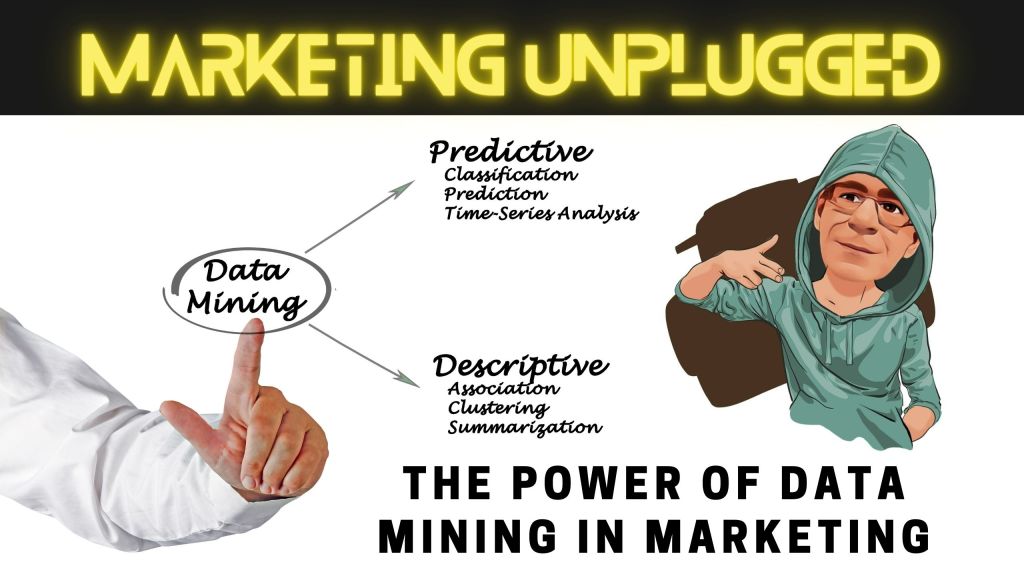

Data mining has become an essential tool for businesses across various industries, including marketing. With the vast amounts of data available today, data mining enables marketers to extract valuable insights and patterns from their customer data, which can help improve marketing strategies, identify new opportunities, and drive business growth. This article will explore the benefits of data mining in marketing, including targeted marketing, customer segmentation, product development, and predictive modeling. We will also examine the process of data mining and the techniques and tools used to extract insights from large and complex data sets. Finally, we will discuss the limitations and challenges of data mining and best practices for using data mining in marketing. By the end of this article, readers will have a deeper understanding of data mining and its value in marketing, as well as insights into how to leverage data mining to drive business success.

Benefits of Data Mining in Marketing
Data mining has several benefits in marketing, including:
Targeted marketing
One of the key benefits of data mining in marketing is its ability to enable targeted marketing. By analyzing large datasets of customer information, marketers can gain insights into customer behavior, preferences, and interests. This information can be used to create targeted marketing campaigns that are tailored to specific customer segments. Here are some ways in which data mining can be used for targeted marketing:
- Personalized marketing messages: By analyzing customer data, marketers can create personalized marketing messages that speak to each customer’s unique interests and needs. For example, a retailer might send a personalized email to a customer, suggesting products that are related to their previous purchases.
- Tailored product recommendations: Data mining can be used to suggest products to customers based on their past purchases, browsing history, or other relevant data. This can help in increasing sales and improving customer satisfaction by offering relevant product recommendations.
- Customer profiling: By analyzing customer data, marketers can create profiles of their target customers and tailor their marketing efforts accordingly. For example, a luxury brand might analyze customer data to identify their target customers’ income levels, lifestyles, and purchasing habits, and use this information to create targeted marketing campaigns.
- Location-based marketing: Data mining can also be used to create location-based marketing campaigns. By analyzing location data, marketers can identify customers who are near a specific store or event and send them targeted marketing messages.
Targeted marketing through data mining can lead to more effective marketing campaigns and higher sales, as it enables marketers to reach the right customers with the right message at the right time.
Customer segmentation
Data mining is also useful in segmenting customers based on common characteristics or behaviors. By analyzing large datasets, marketers can identify groups of customers with similar interests, needs, or behaviors. This can help in creating targeted marketing campaigns and customizing product offerings to meet the specific needs of each customer segment. Here are some ways in which data mining can be used for customer segmentation:
- Demographic segmentation: By analyzing demographic data such as age, gender, income, and education level, marketers can create customer segments based on shared characteristics. This can help in tailoring marketing messages and product offerings to each segment.
- Behavioral segmentation: Data mining can also be used to identify customer segments based on their behaviors, such as purchase history, frequency of purchase, and browsing history. This can help in creating targeted marketing campaigns and product recommendations that are relevant to each segment.
- Psychographic segmentation: By analyzing customer data such as interests, values, and lifestyles, marketers can create customer segments based on shared psychographic characteristics. This can help in tailoring marketing messages and product offerings to each segment.
- Geographical segmentation: Data mining can also be used to identify customer segments based on their geographic location. This can help in creating location-based marketing campaigns and tailoring product offerings to meet the specific needs of customers in each region.
Customer segmentation through data mining can help marketers to create more targeted and effective marketing campaigns, increase customer engagement and retention, and drive sales growth. By understanding the unique characteristics and needs of each customer segment, marketers can deliver more personalized experiences to their customers and improve overall business outcomes.
Product development
Data mining can be used to gain insights into customer preferences and feedback, which can help in developing and improving products. Here are some ways in which data mining can be used for product development:
- Identifying product gaps: By analyzing customer data and feedback, marketers can identify areas where there is a gap in the market for a particular product. This can help in developing new products that meet the specific needs and preferences of customers.
- Improving existing products: Data mining can also be used to identify areas where existing products can be improved. By analyzing customer feedback, marketers can identify areas where customers are dissatisfied or where improvements can be made. This can help in creating more appealing and competitive products.
- Predictive modeling: Data mining can be used to develop predictive models that can forecast future product demand and sales trends. This can help in making informed decisions about product development and marketing efforts.
- Customer feedback analysis: By analyzing customer feedback data, marketers can gain insights into customer preferences, needs, and pain points. This can help in developing products that meet customer needs and preferences, improving customer satisfaction and increasing sales.
Data mining can be a valuable tool for product development, enabling marketers to gain insights into customer preferences, forecast future product demand, and identify areas for improvement in existing products. By leveraging customer insights to inform product development efforts, marketers can create more successful and profitable products that better meet the needs of their target audience.
Predictive modeling
Data mining can be used to develop predictive models that can forecast future trends and patterns. In marketing, predictive modeling can be used to predict customer behavior, identify potential customers, and forecast sales trends. Here are some ways in which data mining can be used for predictive modeling:
- Customer segmentation: By analyzing customer data, marketers can identify customer segments with similar characteristics and behaviors. This can help in predicting future customer behavior and creating targeted marketing campaigns that are tailored to the needs of each segment.
- Churn prediction: Data mining can be used to identify customers who are likely to churn (i.e., stop using a product or service) in the future. By predicting which customers are most likely to churn, marketers can take proactive measures to retain those customers, such as offering special promotions or providing additional customer support.
- Lead scoring: Data mining can be used to identify potential customers who are most likely to purchase a product or service. By assigning a score to each potential customer based on their characteristics and behaviors, marketers can prioritize their sales efforts and focus on those leads that are most likely to convert into customers.
- Sales forecasting: Data mining can be used to forecast future sales trends based on historical sales data and other relevant factors such as economic indicators, seasonality, and marketing campaigns. This can help in making informed decisions about inventory management, resource allocation, and marketing efforts.
Predictive modeling through data mining can help marketers to make more informed and data-driven decisions, improving the effectiveness and efficiency of their marketing efforts. By predicting customer behavior, identifying potential customers, and forecasting sales trends, marketers can create targeted marketing campaigns and allocate resources more effectively, ultimately driving revenue growth and business success.
Real-life examples of data mining in marketing:
One real-life example of data mining in marketing is Amazon’s recommendation engine. By analyzing customer purchase history and behavior, Amazon’s recommendation engine can suggest new products to customers that they are likely to be interested in, based on their previous purchases. This has helped Amazon to increase sales and improve customer satisfaction by providing a more personalized shopping experience.
Another example is Netflix’s recommendation algorithm, which suggests TV shows and movies to users based on their viewing history and preferences. By analyzing user data, Netflix can offer personalized recommendations to each user, which has helped the company to increase engagement and reduce churn.
Data mining is a valuable tool for marketers, enabling them to gain insights into customer behavior, segment customers, develop new products, and make accurate predictions. By using data mining techniques, marketers can make data-driven decisions that result in better business outcomes.

How Data Mining Works
Overview of the data mining process:
The data mining process typically involves the following steps:
- Data collection: Gathering data from various sources, such as customer databases, social media, and other online platforms.
- Data preparation: Cleaning, organizing, and transforming the data into a format that is suitable for analysis.
- Data exploration: Examining the data to identify patterns, relationships, and other insights.
- Model building: Creating data models and algorithms that can be used to predict future outcomes.
- Model testing and validation: Testing the accuracy and reliability of the data models and algorithms.
- Deployment: Implementing the data models and algorithms in real-world applications.
Techniques and tools used in data mining:
Data mining relies on a range of techniques and tools to extract insights from large and complex data sets. Some common techniques and tools used in data mining include:
- Machine learning: A type of artificial intelligence that enables systems to learn from data and make predictions or decisions.
- Cluster analysis: A technique that groups similar objects or data points together based on their characteristics.
- Association rule mining: A technique that identifies relationships between variables and objects.
- Regression analysis: A statistical technique that predicts the relationship between variables and identifies correlations.
- Neural networks: A type of machine learning algorithm that mimics the structure of the human brain.
Data mining algorithms and models:
Data mining algorithms and models are the core of the data mining process. These algorithms and models are used to analyze data and extract insights and patterns that can be used to make informed decisions. Some common data mining algorithms and models include:
- Decision trees: A tree-like model that breaks down data into smaller and smaller subsets based on a set of criteria.
- Random forests: A machine learning algorithm that combines multiple decision trees to improve accuracy and reduce overfitting.
- Naive Bayes: A probabilistic algorithm that predicts the likelihood of an event based on the probability of related events.
- K-means clustering: A technique that groups data points into clusters based on their similarities.
Limitations and challenges of data mining:
While data mining can be a powerful tool for marketers, it also comes with some limitations and challenges. Some of these include:
- Data quality: Data mining relies on high-quality data, and poor data quality can lead to inaccurate results.
- Interpretation: The insights gained from data mining must be interpreted and applied in the right way to make informed decisions.
- Overfitting: Data models that are overly complex can lead to overfitting, which can result in inaccurate predictions.
- Privacy and ethical concerns: Data mining can raise concerns about privacy and ethical issues, particularly when it comes to the use of personal data.
While data mining comes with some challenges and limitations, it remains a powerful tool for marketers looking to gain insights into customer behavior, predict trends, and improve marketing strategies. By using the right techniques, tools, and algorithms, marketers can leverage the power of data mining to create targeted marketing campaigns, develop new products, and grow their businesses.

Best Practices for Data Mining in Marketing
To get the most out of data mining in marketing, businesses need to follow best practices, including:
Data collection and preparation
Data collection and preparation are critical steps in the data mining process, as they determine the quality and relevance of the data that is used for analysis. Here are some best practices for data collection and preparation in the marketing industry:
- Identify the relevant data sources: Before collecting data, it is important to identify the relevant data sources that will be used for analysis. This may include data from internal systems, such as customer relationship management (CRM) software, or external sources, such as social media platforms.
- Define data variables: It is important to define the variables that will be used in the data analysis. This may include demographic information, purchase history, or behavioral data.
- Collect and integrate data: Data can be collected from various sources and integrated into a single dataset for analysis. This may involve data cleaning and formatting to ensure that the data is consistent and accurate.
- Use data sampling techniques: Sampling techniques can be used to reduce the size of large datasets and make the data more manageable for analysis.
- Address missing data: Missing data can be a common issue in data collection. It is important to address missing data, either by filling in the missing values or by removing incomplete records.
- Consider data security: Data security is an important consideration in data collection, as it involves sensitive information about individuals and organizations. It is important to use secure methods for data collection, storage, and transmission to protect the data from unauthorized access or misuse.
By following best practices for data collection and preparation, marketers can ensure that the data used for analysis is accurate, relevant, and appropriate for the research question or marketing goal. This can lead to more effective marketing strategies and better business outcomes.
Ensuring data quality
Data quality is essential for accurate analysis and effective decision-making. Here are some best practices to ensure data quality in the data mining process:
- Define quality criteria: It is important to define quality criteria for the data, such as completeness, accuracy, consistency, and relevance. This will help guide the data collection and preparation process.
- Perform data profiling: Data profiling involves analyzing the data to identify patterns and inconsistencies. This can help identify data quality issues, such as missing values, outliers, or duplicates.
- Use data validation techniques: Data validation techniques, such as data verification or data comparison, can help ensure that the data is accurate and complete.
- Apply data standardization: Data standardization involves converting data into a common format, which can help ensure consistency and accuracy across different data sources.
- Implement data governance: Data governance involves establishing policies and procedures for data management, such as data security, data privacy, and data sharing. This can help ensure that data is managed in a responsible and ethical manner.
Applying the right data mining techniques
There are a variety of data mining techniques available, each with its strengths and limitations. Here are some best practices for applying the right data mining techniques in the marketing industry:
- Choose the right technique for the research question: Different data mining techniques are suited to different types of research questions. For example, classification techniques can be used to predict customer preferences, while clustering techniques can be used to segment customers based on behavior.
- Use multiple techniques: It is often useful to use multiple data mining techniques to cross-validate the results and identify patterns that may not be apparent with a single technique.
- Optimize parameters: Many data mining techniques require the specification of parameters, such as the number of clusters or the level of significance. Optimizing these parameters can help improve the accuracy of the analysis.
- Consider the scalability of the technique: Some data mining techniques may not be scalable to large datasets or may require significant computing resources. It is important to consider the scalability of the technique before applying it to a large dataset.
Understanding the results of data mining
Understanding the results of data mining is essential for effective decision-making. Here are some best practices for understanding the results of data mining:
- Interpret the results in the context of the research question: The results of data mining should be interpreted in the context of the research question or marketing goal. It is important to understand the practical implications of the results.
- Validate the results: The results of data mining should be validated to ensure that they are accurate and reliable. This can be done by comparing the results to known values or using statistical techniques to assess the validity of the results.
- Communicate the results effectively: The results of data mining should be communicated effectively to decision-makers, such as marketers or executives. This may involve using visualizations or summaries to highlight key insights.

Ethical considerations in data mining
Data mining raises a number of ethical considerations, such as privacy, consent, and fairness. Here are some best practices for addressing ethical considerations in data mining:
- Obtain informed consent: It is important to obtain informed consent from individuals before collecting or using their data for data mining. This may involve explaining the purpose of the data mining and the potential implications for privacy.
- Protect personal information: Personal information should be protected during the data mining process. This may involve de-identifying the data or using secure storage and transmission methods.
- Ensure fairness: Data mining results should be used in a fair and unbiased manner. This may involve examining the data and analysis for potential biases, such as demographic or geographic biases, and taking steps to mitigate those biases.
- Comply with regulations: Data mining should be conducted in compliance with relevant laws and regulations, such as data protection laws or industry standards for data use and privacy.
- Practice transparency: Organizations should be transparent about their data mining practices and the data they collect and use. This may involve providing clear information to individuals about their data rights and the purposes of data mining.
Conclusion
Data mining is a valuable tool for marketers in today’s data-driven business environment. By using data mining techniques, marketers can analyze large datasets to identify patterns, trends, and insights that can inform marketing strategies and tactics. However, to achieve the best results, marketers must follow best practices for data collection and preparation, data quality, applying the right data mining techniques, understanding the results, and addressing ethical considerations. By doing so, marketers can ensure that their data mining efforts are effective, efficient, and ethical, leading to better outcomes for both their organizations and their customers.
References
- Jain, A. K., & Dubes, R. C. (1988). Algorithms for clustering data (Vol. 7). Prentice Hall.
- Han, J., Pei, J., & Kamber, M. (2011). Data mining: concepts and techniques. Morgan Kaufmann Publishers. 3. Witten, I. H., Frank, E., & Hall, M. A. (2016). Data mining: practical machine learning tools and techniques. Morgan Kaufmann Publishers.
- Microsoft. (2022). What is Data Mining?. https://docs.microsoft.com/en-us/sql/analysis-services/data-mining/data-mining-ssas?view=sql-server-ver15
- IBM. (2022). The importance of data mining in today’s business environment. https://www.ibm.com/analytics/data-mining-importance-business-environment
Further Reading:
- Berry, M. J., & Linoff, G. S. (1997). Data mining techniques: for marketing, sales, and customer support. John Wiley & Sons.
- Tan, P. N., Steinbach, M., & Kumar, V. (2013). Introduction to data mining. Pearson Education.
- Hastie, T., Tibshirani, R., & Friedman, J. (2009). The elements of statistical learning: data mining, inference, and prediction. Springer.

 Marketing Unplugged
Leave a Reply