

The First Meeting
I’ll never forget the first time I sat across from Miriam and Daniel, the owners of this med spa chain.
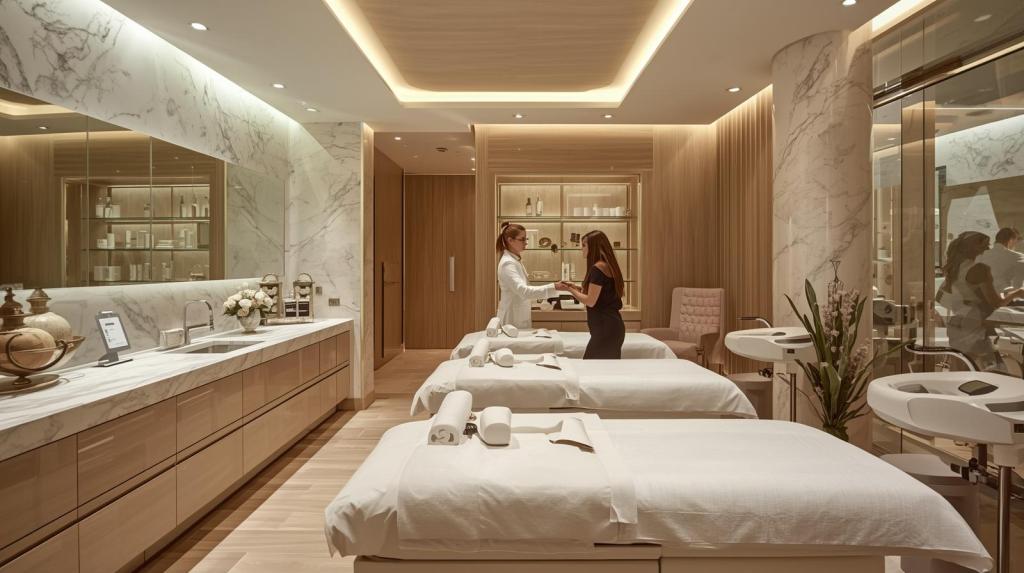
It was a gray Tuesday afternoon, the kind of day when people drag their feet a little. We met in one of their suburban clinics, and when I walked in, everything looked like money had been spent in the right places. Marble counters. Sleek machines humming quietly in the background. The faint scent of eucalyptus mixed with disinfectant. Soft music playing, the kind that’s supposed to put you at ease.
At first glance, you’d think this place was thriving. It looked like the cover of a lifestyle magazine. But then my eyes adjusted, and I saw the truth: two staff members leaning against the counter, scrolling their phones. Treatment rooms sitting empty. A receptionist trying to look busy when there was nothing to do.
They’d built a palace, but it was empty.
When we sat down, they laid it out. Three clinics. Millions invested between them. Skilled nurses. Licensed injectors. Everything you’d think would guarantee success. But the reality? Ten, maybe fifteen clients a day at each location. And most of those were discount hunters who came once and didn’t come back.
Miriam spoke first. She was direct, no fluff. “We know we’re good at what we do. People who come here like us. But not enough people are coming. We’re invisible in our own city.”
Daniel added quietly, “Every week, we’re covering payroll and rent by the skin of our teeth. We can’t keep doing this forever.”
That’s when I told them the truth — the same truth I’ve told to countless business owners in different industries. “Your problem isn’t your service. It isn’t your staff. It isn’t your competitors. Your problem is that nobody sees you, nobody hears you, and nobody knows why they should trust you. Fix those things, and the patients will come. Keep ignoring them, and these beautiful clinics will close.”
The room went quiet after that. They both nodded. They knew it was true. That’s where we started.
Months 1–2: Walking in as a Customer
I always begin the same way: I become the customer. Not the loyal one who already knows you. The stranger. The curious first-timer who has no loyalty, no patience, and plenty of other options.
So one night I sat down with my laptop and pulled up their website. I wanted to see it through fresh eyes.
The site looked fine at first. Crisp design, glossy photos, soft pinks and whites to make it feel elegant. But the cracks showed quickly.
Treatments were buried three menus deep. Descriptions were written in clinical language that would intimidate anyone outside the industry. “Neurotoxin injections for glabellar lines” — nobody speaks like that when they’re deciding whether to book Botox. The booking form asked for so many details it felt like hospital paperwork.
I thought about Yael, a 36-year-old woman who might be thinking about Botox for the first time. She’s not a beauty blogger. She’s not an influencer. She’s just someone who looks in the mirror, sees lines on her forehead, and wonders if she should do something about them. One night she’s sitting on her couch, scrolling on her phone, maybe a glass of wine nearby. She clicks into this website, hoping for reassurance. Instead, she gets jargon and forms. She closes the tab and tells herself, “Maybe later.”
That “maybe later” is how businesses die.
I told Miriam and Daniel exactly that. “Your website isn’t a doorway. It’s a wall. People come in curious, and you push them right back out. If the first thing they feel is confusion, they’ll never get as far as trust.”
So we stripped it down and rebuilt it. Treatments explained in everyday words: “Soften forehead lines so you look refreshed, not frozen.” The booking form went from six steps to two. We replaced the glossy stock models with real photos — real people smiling after real treatments.
It didn’t take long to see results. By the end of month two, people weren’t just browsing. They were booking.
One of the first was Shira, a local teacher. When she checked in for her first appointment, she told the receptionist, “I booked because your site didn’t make me feel dumb. I didn’t feel like I needed a degree to understand what I was getting. It felt like it was written for someone like me.”
That comment stuck with me. Because Shira wasn’t alone. She was the voice of every potential client who’d been chased away before. And now, for the first time, the site was bringing them in instead of pushing them out.
Months 3–4: Showing Up Where People Search
Once the website was no longer turning people away, we had to face the bigger problem: they weren’t showing up at all when people searched.
This business lives and dies on quick decisions. Nobody spends weeks researching where to get Botox. Someone notices lines in the mirror, or they see a friend’s lips on Instagram. They pick up their phone and type “Botox near me.” If you’re not there in that moment, you’re invisible.
I tested it myself. “Botox downtown.” Nothing. “Lip filler near me.” Nothing. “Best facial [city].” Still nothing.
I told them, “If you’re not there at the exact second someone makes that decision, you don’t exist.”
So we rebuilt their search presence from the ground up — the same foundation I map out in Rank Higher on Google. Each clinic got its own Google Business Profile. Photos. Reviews. Categories cleaned up. Treatment pages rewritten in plain language that matched what people actually type into search bars.
It worked faster than I expected. By month four, phones were ringing more often, and not just from ads.
Eitan, a 44-year-old lawyer, came into the downtown clinic. He told the front desk he had searched “best Botox downtown.” They popped up first. His words stuck with me: “If you’re at the top of Google, you must know what you’re doing.”
That’s the quiet truth most people won’t say out loud. Visibility equals credibility.
Months 5–6: Telling the Real Story
Getting clients in the door is step one. Making them come back is step two. For that, you need more than visibility. You need a story.
I sat Miriam and Daniel down and asked them why they started these clinics. Not the pitch. The truth.
It took a while, but it came out. Miriam had been a nurse for over a decade and was worn out from treating people like files in a hospital system. She wanted to create a place where clients felt cared for, not processed. Daniel had come from hospitality. He believed in detail, in atmosphere, in the idea that aesthetics should feel like luxury but never intimidation.
That story was nowhere to be found in their marketing.
So we brought it out. The homepage was rewritten into a welcome message. The About page became their mission. Their social media stopped sounding like a product catalog and started sounding like a real voice.
This is what I mean when I talk about Build Stronger Brand Awareness. Numbers and facts fade. Stories stick.
And clients responded.
Tamar, a first-time visitor, wrote in her review: “I came here because you looked professional. I’m coming back because you made me feel like I mattered.”
That’s the line every business should want.
Months 7–8: Rooting Into the Community
The biggest leap came when we stopped thinking just about clicks and started thinking about neighborhoods.
Too many med spas hide behind glossy ads and influencer posts. They look good on the surface, but they never get rooted.
We flipped it.
We tied each clinic into its community. Sponsored school fundraisers. Partnered with gyms. Co-hosted events with salons. We didn’t just advertise — we showed up.
And when you show up, people notice.
By month seven, referrals were pouring in. Coaches telling parents where to send teenagers with acne. Trainers telling clients about recovery facials. Business owners trading services for partnerships.
Marisol, a mom of two, booked her first facial after seeing the spa sponsor her kids’ soccer team. She told the receptionist, “If you’re helping our kids, I’m helping you.”
That’s not advertising. That’s belonging.
Month 9: Full Calendars
By the ninth month, the shift was undeniable.
The suburban clinic that once limped along was now running a waitlist. The downtown clinic was fully booked, professionals lining up weeks in advance. The clinic in the Hispanic neighborhood, now with bilingual staff front-and-center and Spanish content online, had become the trusted name in that community.
I dropped by one afternoon. The place had a buzz. Phones ringing. Staff moving fast. Machines humming. Every chair full.
That night, Miriam texted me one line: “We’re booked out for the first time. I don’t know if I should cry or celebrate.”
That’s when I knew we’d done it.
The Results
When we started, they were invisible. By month nine, they weren’t just visible — they were the default choice.
Patient volume more than doubled. Bookings became steady instead of sporadic. Retention climbed because clients finally felt understood.
But the numbers weren’t the real story. The real story was Shira, the teacher who booked because the site finally made sense. It was Eitan, the lawyer who walked in because they ranked on Google. It was Tamar, who came back because she felt cared for. It was Marisol, who trusted them because they supported her kids.
That’s what success looks like. Not abstract metrics, but real people walking through the doors again and again.
The Lesson
Most med spas don’t fail because of what happens inside their walls. They fail because the outside world doesn’t see them, doesn’t hear them, doesn’t trust them.
This chain had the rooms, the staff, the treatments. But until we fixed visibility, story, and community, they were running in place.
Growth didn’t come from gimmicks. It came from the basics done right. A website that performed. Local search that put them where people were looking. A story that built trust. And systems that turned clicks into clients.
That’s what turned half-empty rooms into full calendars in nine months.
Not luck. Not shortcuts. Just the kind of old-fashioned work that makes people notice you, trust you, and come back again and again.

 Marketing Unplugged
Leave a Reply