
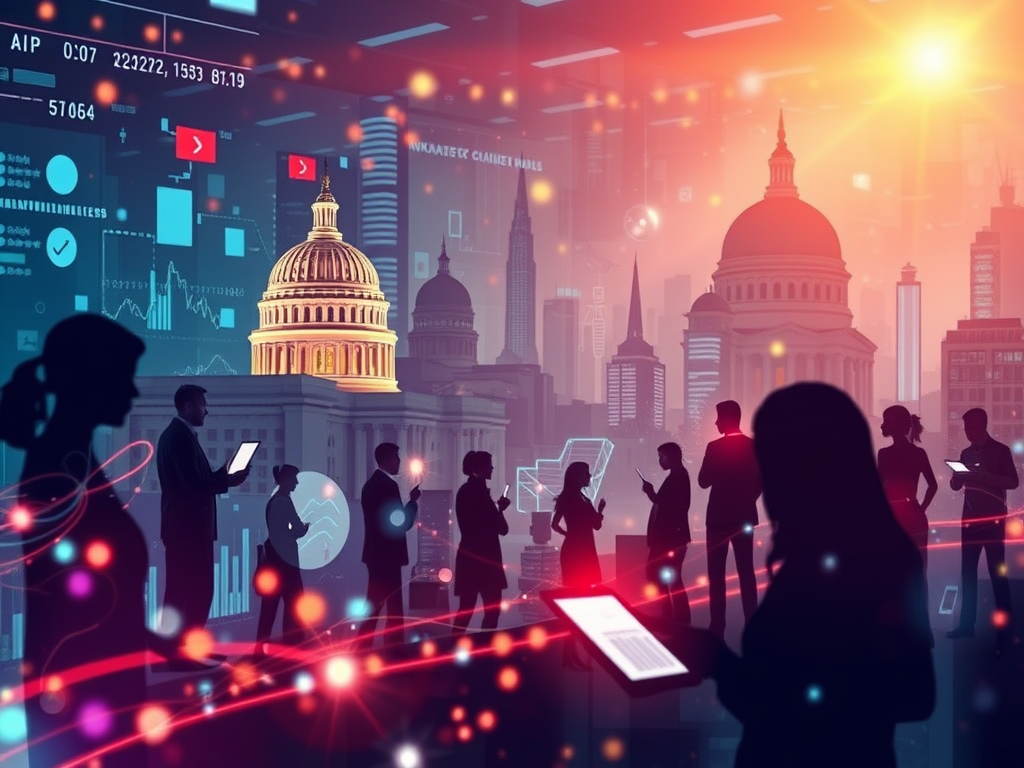

We’re Not Marketing in a Vacuum
Let’s be real: marketing doesn’t exist in isolation. It’s influenced by what’s happening in the world — culturally, socially, economically, and yes, politically. Over the past few years, we’ve seen firsthand how political shifts can rattle markets, change consumer sentiment overnight, and create ripple effects across entire industries. Whether it’s privacy regulation, trade policy, or social movements, today’s political landscape is having a louder and more direct impact on how we market.
Just look at the 2024 U.S. elections and the global policy shifts around AI and sustainability — these aren’t just news items; they’re strategic variables.
That’s not necessarily a bad thing. It just means we need to stay alert, agile, and ahead of the curve. The good news? We’ve got better tools than ever — tech that’s changing the game and letting us adapt faster, get smarter, and connect more authentically.
In this piece, I want to break down how the changing political winds are reshaping marketing — and more importantly, where the opportunities are. Let’s talk AI, blockchain, generative tools, privacy, personalization, and what it all means for building brands in 2025 and beyond.
Political Climate = Consumer Behavior Shifts
Today’s consumers are plugged in. They care about the world around them, and they vote with their wallets. In the U.S., nearly 70% of Gen Z and Millennials say they expect brands to take a stand on political or social issues. That’s huge.
Whether it’s environmental policy, healthcare debates, or data privacy laws, these political forces don’t just make the news — they reshape what people expect from brands. This affects everything from the tone of your ad copy to your supply chain transparency.
Examples:
- The overturning of Roe v. Wade sparked nationwide brand responses. Some brands gained loyalty by supporting employees; others faced backlash for silence.
- Rising tensions over data privacy (looking at you, TikTok bans and GDPR 2.0) are forcing brands to rethink how they collect, store, and use data.
- Ongoing debates around AI ethics and automation are impacting how brands use emerging tools in customer-facing content.
Consumers are watching. Authenticity, consistency, and transparency matter more than ever.
Emerging Technologies That Give You an Edge
So what do we do with all this change? We lean on tech. The most innovative marketers are already weaving new tools into their stack — not just because it’s trendy, but because it’s how you stay responsive, agile, and data-driven.
Here are four technologies that are rewriting the marketing playbook:
1. Generative AI (GenAI)
We’ve moved way beyond simple copy templates. With tools like ChatGPT, Jasper, and Midjourney, marketers are generating custom content at scale — from email sequences to video scripts, product descriptions to social media calendars.
The opportunity: Political shifts often demand rapid message pivots. Generative AI gives you the flexibility to create tailored messaging for different audience segments, in real-time. Fast, scalable, and on-brand.
For a deeper dive into how AI is transforming content marketing, check out The Role of AI in Content Marketing: Smarter, Faster, Better.
2. Predictive AI & Machine Learning
Predictive analytics are no longer reserved for Fortune 500s. Today, even lean marketing teams can tap into platforms that forecast customer behavior, detect churn risk, and personalize the customer journey down to the individual level.
Example: A retail brand might use predictive analytics to adjust its ad spend in regions impacted by new tariffs or political disruptions. It’s about getting smarter with targeting and budget allocation.
Explore more on this in The AI Revolution: Transforming Marketing in the Digital Age.
3. Blockchain for Transparency & Trust
Trust is everything in a politically charged environment. Consumers want proof — not promises. Blockchain tech allows brands to offer verifiable claims about their product sourcing, supply chain ethics, or carbon offsets.
Use case: A sustainable fashion brand can let customers scan a QR code on their clothing label and trace the item’s entire journey — from raw material to finished product. That’s how you build next-gen brand loyalty.
4. Augmented & Virtual Reality (AR/VR)
AR and VR aren’t just for gaming. They’re being used to create immersive experiences that connect customers to products — especially when physical interaction isn’t possible or ideal. Tools like Shopify AR or WebXR have made this tech more accessible to startups and small businesses.
Example: In politically sensitive or high-security regions, a VR showroom or AR trial experience can let customers “test” a product virtually, eliminating the need for physical travel or shipping.
For insights into how AR and VR are shaping content marketing, read The Future of Content Marketing: Visual and Interactive Content Dominance.
Strategy Shifts to Match Political Realities
Here’s the key: it’s not just about using tech — it’s about using it intentionally in the context of what’s happening in the world.
a. Agile Messaging for a Fast-Moving World
Agile marketing methodologies let you test, iterate, and pivot messaging faster. When political news breaks that affects your audience, you can respond quickly — not with tone-deaf messaging, but with relevance and respect.
b. Data Privacy Compliance as a Differentiator
Don’t just comply with GDPR, CCPA, or the next wave of regulations — lead with it. Build campaigns around your data ethics and show customers you take privacy seriously.
For a comprehensive guide on ethical considerations in AI marketing, see Navigating the Ethical Landscape of AI in Marketing.
c. Real-Time Marketing Around Political Events
More brands are experimenting with real-time marketing tied to elections, legislative wins, or policy debates — but it has to be handled with care. AI tools can help monitor sentiment and tailor outreach by region or demographic in a hyper-targeted way.
d. Localized Campaigns With Geo-Targeted Tech
Political impact varies by location. Use geo-targeting to craft campaigns that speak directly to a community’s experience — whether that’s around a local ballot issue, economic condition, or cultural concern.
Real-World Case Studies
1. Patagonia
The brand continues to lead in values-based marketing. From political ads endorsing environmental legislation to transparent sourcing practices powered by blockchain, Patagonia shows how a strong political stance can strengthen brand equity.
2. Ben & Jerry’s
They’re famous for leaning in on social and political issues. What’s less visible is the data strategy behind their campaigns — using predictive tools to identify aligned customer segments and tailor distribution.
3. Nike
When they partnered with Colin Kaepernick, Nike sparked global conversation — and a massive wave of brand loyalty within key demographics. What many overlook is how surgically they deployed data: Nike used sentiment analysis, location data, and purchase history to ensure their messaging reached supportive audiences first, avoiding broad backlash. Political marketing, when done right, is a precision sport.
4. Local Businesses Leveraging AI
We’ve also seen a rise in small, local brands using AI to navigate politically influenced changes. For example, during the pandemic, many local healthcare providers had to pivot messaging on vaccines, safety, and telehealth access. Those using smart automation platforms were able to shift gears quickly — updating landing pages, ad copy, and automated email sequences without the lag time of traditional agencies.
If you’re interested in how small business marketing can adapt quickly, check out Embracing Artificial Intelligence: How Businesses Can Thrive in the Age of Automation.
Where the Real Opportunities Are in 2025 and Beyond
Let’s turn the disruption into an advantage. Political chaos often creates space for creativity and innovation. Here’s where marketers should lean in:
🔹 Proactive Personalization
Don’t just react to regulation — lead with personalization that respects privacy. Tools like first-party data modeling, zero-party data collection (think quizzes and interactive tools), and clean data exchanges build both compliance and conversion.
🔹 Brand Activism That’s Backed by Strategy
If your brand is going to take a stand — make sure it’s backed by research, relevance, and operational follow-through. One-off statements won’t cut it anymore. People expect substance.
🔹 AI-Powered Competitive Intelligence
Platforms like Crayon and Similarweb now offer AI-assisted alerts when competitors update messaging, change positioning, or shift strategy — often in response to political or legal shifts. That’s your chance to either counterprogram or capitalize on a gap.
🔹 Content Localization Meets Global AI
As global politics affect trade, immigration, and supply chains, smart marketers are localizing content at scale using AI. Translation tools like DeepL combined with regionally relevant insights let you launch with nuance in multiple markets without hiring entire local teams.
🔹 Community Marketing
In uncertain times, people trust people. Invest in your community strategy — whether that’s email list segmentation, Discord groups, niche forums, or LinkedIn engagement. These are the modern town halls where brand trust is built.
For more ideas, read How to Build and Grow an Active Social Media Community.
Wrapping It Up: Stay Agile, Stay Human
The political world is going to keep shifting. That’s a given. What separates strong marketers from reactive ones is a proactive mindset — backed by tech, driven by data, and rooted in empathy.
Here’s how I’m thinking about marketing in this climate:
- Use new tools, but don’t lose the human voice.
- Respond to politics, but stay rooted in your brand’s mission.
- Track sentiment, but lead with values.
- Be fast, but not reckless.
- Respect privacy, but don’t fear personalization.
The marketers who thrive in this new landscape will be the ones who see change not as chaos — but as clarity. A chance to sharpen what works, ditch what doesn’t, and connect in more meaningful ways than ever before.
If you’re looking to strategize how your brand can thrive in a post-2024 world — from AI rollouts to compliant campaign structure — We are always happy to talk.
👉 Book a strategy session with us here.


 Marketing Unplugged
Leave a Reply