
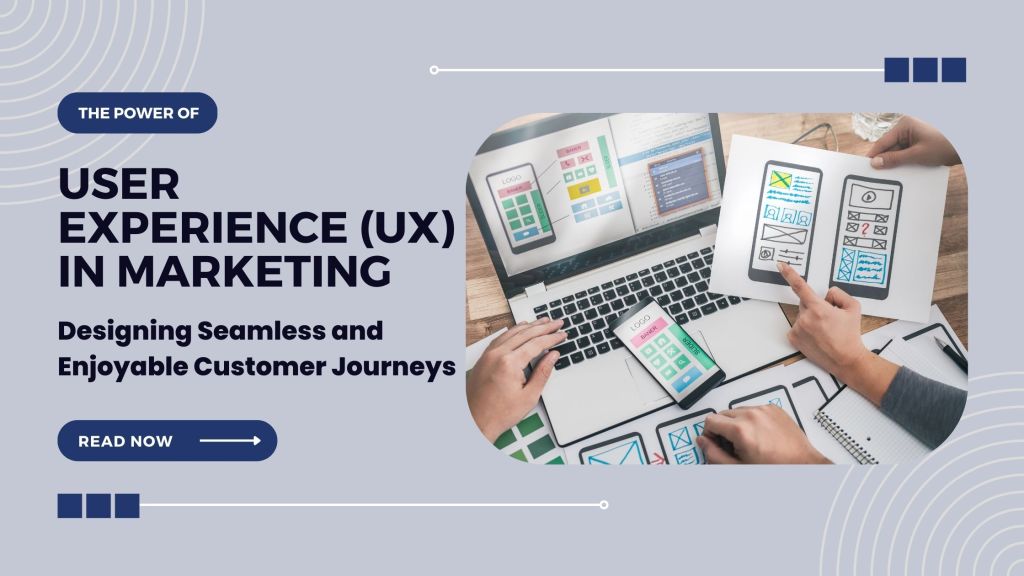

Imagine this: You’re casually browsing through your phone on a lazy Sunday afternoon, looking for a new pair of shoes. Suddenly, you stumble upon a website that captures your attention in a way you’ve never experienced before. The colors are mesmerizing, the layout is incredibly intuitive, and the images of those shoes – they seem to be calling out your name! Before you know it, you’ve spent 20 minutes exploring the site, and you’ve found the perfect pair to add to your collection. That, my dear reader, is the power of exceptional User Experience (UX) in marketing.
Now, you may be wondering why UX is such a big deal in the digital age. Well, the answer is simple: with the ever-growing number of choices available to consumers, businesses must stand out and create meaningful connections with their audience. UX, when done right, can be the game-changer that keeps customers engaged, loyal, and more importantly, happy.
In this article, we’re going to take a deep dive into the world of UX, exploring its importance and role in marketing. We’ll also discuss the key principles of effective UX design, how to create seamless customer journeys, and how to measure the impact of UX on your marketing performance. So, if you’re ready to uncover the secrets of creating unforgettable digital experiences that your customers will adore, grab a coffee, find a cozy spot, and let’s dive in together.
Stay tuned, because we’re about to embark on a fascinating journey that will transform the way you approach marketing and digital experiences. Let’s get started!
The Relationship Between UX and Marketing
Picture yourself as the owner of a charming little bookstore tucked away in a bustling city. The aroma of freshly brewed coffee and the sight of people lost in their favorite books creates an atmosphere that’s nothing short of magical. Your loyal customers love your carefully curated collection, and word of mouth has been steadily drawing in new bibliophiles. But you’ve got a vision to expand your reach and tap into the digital realm, creating an online experience as enchanting as your brick-and-mortar store. The question is, how do you accomplish this? Well, that’s where UX and marketing join forces to create something truly extraordinary.
At its core, marketing is all about understanding and catering to the needs and desires of your customers. Great UX design, in turn, is the secret sauce that enables you to create an online presence that not only reflects your brand’s unique personality but also speaks to the hearts of your target audience. By prioritizing UX, you’re essentially creating a digital space where your customers feel seen, understood, and appreciated.
Now, let’s take a moment to explore the ways in which UX and marketing are intertwined:
- Driving customer engagement: A well-designed website or app that’s easy to navigate and visually appealing can keep users engaged for longer periods. When your digital presence is fine-tuned to address the preferences of your audience, they’re more likely to explore your offerings, sign up for your newsletter, or make a purchase.
- Building trust and loyalty: Trust is the foundation of any lasting relationship, and the same holds true for your customers. When your online platforms provide an enjoyable and seamless experience, your customers are more likely to return and recommend your brand to others. And as we all know, loyal customers are worth their weight in gold.
- Enhancing brand perception: Your digital presence is often the first interaction customers have with your brand. By creating an exceptional UX, you’re sending a message that you care about your customers’ needs and that you’re committed to delivering the best possible experience. This can go a long way in shaping how your audience perceives your brand, setting the stage for future interactions.
So, if you’re ready to step up your marketing game and create a digital experience that captivates your audience, it’s time to embrace the power of UX. Trust me, once you’ve experienced the magic of great UX design in marketing, you’ll never look back.

Key Principles of Effective UX Design
As we embark on this journey to explore the world of UX design, it’s essential to get acquainted with the guiding principles that lay the foundation for extraordinary digital experiences. These principles are like the secret ingredients that, when combined, create a recipe for success. So, without further ado, let’s dive into the key principles of effective UX design:
- Simplicity and ease of use: The old adage “less is more” couldn’t be truer when it comes to UX design. Your website or app should be a breeze to navigate, even for first-time visitors. Focus on decluttering your interface, providing clear calls-to-action, and ensuring that users can accomplish their tasks effortlessly. Remember, simplicity is the ultimate sophistication, and it’s what keeps your customers coming back for more.
- Consistency and familiarity: There’s something inherently comforting about familiarity, and that’s precisely what you should strive for when designing your digital presence. Maintain consistency across your platforms in terms of design elements, layout, and language. This creates a sense of cohesion and makes your audience feel at home, no matter where they are in your digital ecosystem.
- Personalization and customization: In today’s world, where customers are bombarded with generic marketing messages, personalization can be a breath of fresh air. By tailoring your digital experiences to cater to individual preferences, you can create a more engaging and memorable experience for your users. Think of it as your way of saying, “Hey, I see you, and I care about what you like.”
- Accessibility and inclusivity: Great UX design is all about making your digital platforms accessible to everyone, including users with disabilities. By incorporating features such as alternative text for images, transcripts for multimedia content, and keyboard navigation, you’re sending a powerful message that everyone is welcome in your digital space.
- Emotional connection and delight: Now, this is where the magic truly happens. Strive to create digital experiences that resonate with your users on an emotional level. Surprise and delight them with thoughtful touches, such as engaging micro-interactions, personalized recommendations, or heartfelt storytelling. These little moments of joy can go a long way in forging an emotional bond between your brand and your customers.
So, there you have it – the key principles that form the bedrock of effective UX design. By weaving these principles into the fabric of your digital presence, you’ll create an experience that not only captivates your audience but also leaves an indelible mark on their hearts. And isn’t that what great marketing is all about?

Designing Seamless Customer Journeys
Now that we’ve laid the groundwork with the key principles of effective UX design, it’s time to put those principles into action by crafting seamless customer journeys. After all, the ultimate goal of UX is to create an enjoyable and cohesive experience that makes your customers feel valued and understood. So, let’s explore how you can design customer journeys that leave your audience spellbound:
- Mapping customer journey touchpoints: Start by identifying all the possible touchpoints your customers may have with your brand, from discovering your website through a Google search to receiving a post-purchase follow-up email. Map out these touchpoints and try to visualize the journey from your customer’s perspective. This will help you pinpoint areas of friction and identify opportunities for improvement.
- Optimizing website and app navigation: Your website or app should be intuitive and easy to navigate, allowing users to accomplish their tasks without any hassle. Focus on creating a logical information architecture and employing clear, consistent navigation elements. Remember, a user who’s lost is a user who’s likely to abandon your site.
- Integrating marketing channels and platforms: In today’s interconnected world, your customers may interact with your brand through various channels, such as social media, email, or live chat. Ensure that these channels are seamlessly integrated with your website or app, creating a unified experience that leaves your customers feeling connected and supported.
- Using analytics to identify pain points and opportunities for improvement: Data is your best friend when it comes to designing seamless customer journeys. Analyze user behavior and engagement metrics to uncover potential pain points, such as high bounce rates or abandoned shopping carts. By addressing these issues, you can optimize your customer journey and turn potential roadblocks into opportunities for delight.
- Iterative design and testing: Great UX design is not a one-and-done process. It requires continuous iteration and testing to refine and enhance the customer journey. Make it a point to gather user feedback and conduct usability tests, and use these insights to improve your digital experience over time.
By designing seamless customer journeys that truly resonate with your audience, you’re not only creating memorable experiences but also setting the stage for long-term customer loyalty and satisfaction. And in the world of marketing, there’s no greater reward than a happy customer who can’t wait to share their experience with the world.

UX as a Competitive Advantage
In the ever-evolving landscape of digital marketing, standing out from the crowd can be a daunting task. As businesses compete for attention and market share, it’s crucial to find a way to differentiate yourself from the competition. That’s where UX shines as a competitive advantage, providing you with a unique opportunity to create lasting connections with your audience. Let’s delve deeper into how UX can give your business the edge it needs to thrive:
- Creating memorable experiences: A well-designed user experience can leave a lasting impression on your customers, making them more likely to remember your brand and return for future visits. By focusing on delighting your users and exceeding their expectations, you can create an emotional connection that drives loyalty and word-of-mouth recommendations.
- Boosting conversion rates: An enjoyable and seamless UX can have a direct impact on your bottom line. By removing friction points and streamlining the customer journey, you’re making it easier for users to complete their tasks, be it signing up for a newsletter or making a purchase. This, in turn, leads to higher conversion rates and increased revenue.
- Reducing customer churn: It’s no secret that retaining existing customers is more cost-effective than acquiring new ones. By investing in UX, you’re showing your customers that you care about their needs and preferences, fostering a sense of trust and loyalty that encourages them to stick around.
- Enhancing brand reputation: In today’s digital age, word spreads quickly. A delightful user experience can contribute to a positive brand reputation, with satisfied customers more likely to leave positive reviews and recommend your brand to others. This not only increases your credibility but also helps attract new customers.
Take, for example, a lesser-known online meal delivery service that prioritized UX design, offering a user-friendly interface, personalized meal recommendations, and a seamless ordering process. By creating an exceptional experience, they quickly gained a loyal customer base and an edge over their competitors.
By leveraging the power of UX, you can turn your digital presence into a competitive advantage that drives customer satisfaction, loyalty, and long-term growth. So, go ahead and embrace the magic of UX, and watch as it transforms your marketing game and sets you apart from the competition.

Measuring the Impact of UX on Marketing Performance
You’ve embraced the power of UX, and your digital presence is looking better than ever. But how do you know if your efforts are truly making a difference? Just like any other aspect of marketing, it’s essential to measure the impact of UX on your marketing performance. This will help you identify areas of improvement and ensure that your investment in UX is delivering the desired results. So, let’s explore the metrics and methods you can use to gauge the effectiveness of your UX design:
- User engagement metrics: Keep an eye on metrics like time spent on your website, page views per visit, and scroll depth. These can give you valuable insights into how engaged your users are with your content and whether your UX is effectively capturing their attention.
- Conversion rates: One of the primary goals of UX design is to make it easier for users to complete their desired tasks. Monitor your conversion rates – be it newsletter sign-ups, completed purchases, or leads generated – to determine if your UX is effectively driving users toward the desired actions.
- Bounce rates and exit rates: High bounce and exit rates can be indicators of a subpar user experience, suggesting that users are leaving your site without engaging with your content. By analyzing these metrics, you can identify potential pain points in your UX and make necessary adjustments.
- Customer satisfaction and feedback: Don’t underestimate the power of qualitative data when it comes to measuring UX performance. Conduct user surveys, collect feedback through reviews or social media, and engage in one-on-one conversations with your customers to gain insights into their experience with your brand.
- A/B testing and usability testing: Regularly test different variations of your UX design to identify which elements resonate best with your users. Conduct usability tests to understand how users interact with your website or app, and use this information to refine your UX over time.
Let’s take a small e-commerce store that focuses on sustainable clothing as an example. By closely monitoring their UX metrics and conducting regular A/B tests, they were able to identify and address pain points in their customer journey, ultimately resulting in increased engagement and conversion rates.
Remember, iterative design and testing are essential for continuous improvement. A small design agency might use A/B testing to compare different versions of their website, refining their UX based on user feedback and data.
By measuring the impact of UX on your marketing performance, you can ensure that your efforts are delivering tangible results and driving long-term success for your business. So, keep an eye on those metrics, listen to your users, and never stop iterating – because in the world of UX, there’s always room for improvement.

Challenges and Future Trends in UX for Marketing
As we’ve seen, UX plays a pivotal role in creating delightful and memorable experiences for your customers. However, the world of UX is ever-evolving, and marketers must keep up with the latest trends and challenges to stay ahead of the curve. So, let’s explore some of the challenges and future trends in UX for marketing that you should keep an eye on:
Challenges:
- Evolving customer expectations: In today’s fast-paced digital world, customer expectations are constantly shifting. Staying attuned to these changing preferences and adapting your UX accordingly can be a significant challenge for marketers.
- Balancing innovation and familiarity: While it’s essential to stay ahead of the competition and embrace innovation, striking the right balance between cutting-edge design and maintaining familiarity for your users can be tricky.
- Ensuring accessibility and inclusivity: Designing inclusive and accessible digital experiences that cater to a diverse range of users is an ongoing challenge for marketers, requiring constant vigilance and a commitment to universal design principles.
Future Trends:
- AI-powered personalization: Artificial intelligence and machine learning are revolutionizing the way marketers approach personalization. In the future, we can expect even more sophisticated AI-driven tools that enable marketers to create highly personalized and relevant experiences for their users.
- Voice and gesture-based interfaces: As voice assistants and gesture-based technologies become more prevalent, marketers will need to adapt their UX strategies to accommodate these new interaction paradigms, creating seamless and intuitive experiences across multiple devices and platforms.
- The rise of immersive technologies: Virtual reality (VR) and augmented reality (AR) are poised to transform the digital landscape, offering new opportunities for marketers to create immersive and engaging experiences for their customers.
- Ethical design and data privacy: As consumers become increasingly concerned about data privacy and the ethical implications of digital technologies, marketers must prioritize transparent, privacy-conscious design practices to build trust and maintain customer loyalty.
- Designing for mental well-being: With the growing awareness of mental health and well-being, there’s a rising trend in designing digital experiences that promote positive mental states and reduce digital fatigue, creating a more mindful and emotionally resonant UX.
By staying informed about the challenges and future trends in UX for marketing, you’ll be better equipped to adapt and thrive in the ever-changing digital landscape. So, keep your finger on the pulse, embrace new technologies and approaches, and continue to create exceptional experiences that delight and captivate your audience. After all, that’s what great marketing is all about.
Conclusion
As we bring our journey through the world of UX and marketing to a close, it’s evident that the two are intrinsically intertwined. By embracing the power of UX design, marketers can create seamless and enjoyable customer journeys that resonate with their audience on a deeply emotional level. In doing so, businesses can foster long-lasting connections with their customers, driving loyalty, satisfaction, and ultimately, success.
To recap, we’ve explored the key principles of effective UX design, delved into the art of crafting seamless customer journeys, and discussed how UX can serve as a competitive advantage in today’s digital landscape. We’ve also examined how to measure the impact of UX on marketing performance and looked ahead to the challenges and future trends shaping the industry.
So, what’s next? It’s time to put these insights into action and embark on your own UX journey. Take a moment to assess your current digital presence, identify areas for improvement, and start implementing the principles and strategies we’ve discussed. And remember, the world of UX is ever-evolving, so don’t be afraid to iterate, experiment, and adapt to changing customer needs and preferences.
By embracing the magic of UX, you’ll not only elevate your marketing game but also create meaningful, memorable experiences that your customers will cherish for years to come. And in the end, isn’t that what great marketing is all about? So, go forth, and let the power of UX guide you on the path to marketing success.


 Marketing Unplugged
Leave a Reply