


In today’s digital age, consumers have access to an abundance of information and options when it comes to purchasing products or services. With so much choice and competition, it can be difficult for businesses to stand out and attract customers. This is where the power of social proof comes in.
Social proof refers to the psychological phenomenon where people rely on the opinions and actions of others to guide their own behavior. Essentially, people are more likely to trust and follow the lead of others who they perceive to be similar to themselves. In the context of marketing, this means that customer reviews, testimonials, and other forms of user-generated content can have a significant impact on consumer behavior.
In fact, a study by BrightLocal found that 87% of consumers read online reviews for local businesses and that 72% of consumers say that positive reviews make them trust a business more. Additionally, another study by Nielsen found that 92% of consumers trust recommendations from friends and family over all other forms of advertising.
With such a high level of importance placed on social proof, it’s essential for businesses to understand how to leverage customer reviews and other forms of user-generated content in their marketing strategies. In this article, we’ll explore the theory behind social proof, as well as practical tips and real-life examples of how businesses can effectively incorporate social proof into their marketing efforts.

Types of Social Proof
There are several types of social proof that businesses can leverage in their marketing strategies. Here are some of the most common:
- Expert social proof: This refers to endorsements or recommendations from recognized experts or authorities in a particular industry or field. For example, a beauty brand might feature a testimonial from a celebrity makeup artist who uses and recommends its products.
- Celebrity social proof: Similar to expert social proof, celebrity social proof involves endorsements or recommendations from well-known public figures. This can be particularly effective for products or services that are associated with a particular lifestyle or image.
- User social proof: User social proof is perhaps the most common and effective form of social proof. This refers to customer reviews, ratings, and testimonials that provide evidence of a product or service’s effectiveness, quality, or value.
- Wisdom of the crowd: This refers to the idea that people are more likely to follow the actions or opinions of a large group of people. This can be seen in the popularity of crowdfunding campaigns or in the use of social media influencers who have large followings.
- Certification social proof: Certification social proof involves displaying certifications or badges from trusted organizations or authorities. For example, an e-commerce site might display a security badge to reassure customers that their personal and financial information is safe.
By understanding the different types of social proof and how they can be applied in different contexts, businesses can effectively build trust and credibility with potential customers.
While all types of social proof can be effective, user social proof is often the most powerful. Why? Because people trust the opinions of their peers more than they trust experts or celebrities. In fact, a study by BrightLocal found that 91% of consumers read online reviews before making a purchasing decision.
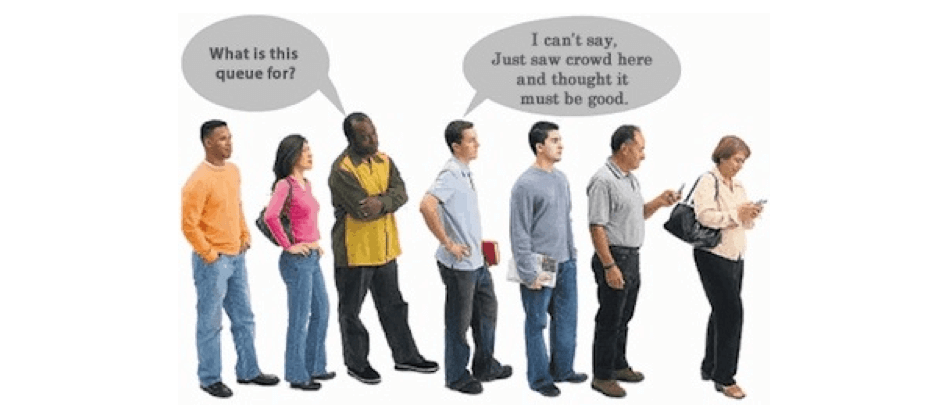
The Psychology Behind Social Proof
The power of social proof lies in the psychology behind it. As social creatures, humans tend to look to others for cues on how to behave in certain situations. This is known as social comparison theory, and it explains why people are more likely to trust and follow the lead of others who they perceive to be similar to themselves.
One reason for this is that social proof provides a shortcut for decision-making. When faced with a lot of options or information, it can be overwhelming and time-consuming to evaluate everything on your own. Social proof provides a quick and easy way to filter through the noise and make a decision based on the experiences of others.
Another reason for the power of social proof is that it taps into the principle of social validation. We all have a fundamental need to feel accepted and liked by others, and social proof can provide a sense of validation and belonging. By following the lead of others, we feel like we’re part of a larger group or community, which can be satisfying and reassuring.
Furthermore, social proof can create a sense of FOMO (fear of missing out). When we see others using or recommending a product or service, we may feel like we’re missing out on something valuable if we don’t also participate. This can be particularly effective for products or services that are associated with exclusivity or popularity.
Social proof is a powerful tool for businesses because it speaks to our innate need for connection, validation, and efficient decision-making. By understanding the psychology behind social proof, businesses can craft effective marketing strategies that resonate with potential customers and drive conversion rates.

The Impact of Social Proof on Marketing
So how does social proof impact marketing? First and foremost, social proof increases trust and credibility. If potential customers see that others have had a positive experience with a product or service, they’re more likely to trust that it’s worth their time and money.
Social proof also leads to higher conversion rates. A study by Spiegel Research Center found that displaying reviews and ratings on a product page can increase conversion rates by as much as 270%.
Social proof enhances customer engagement. When customers feel that their opinions are valued and that their experiences are being shared with others, they’re more likely to feel invested in a brand and become loyal customers.
The impact of social proof on marketing is clear: it can help businesses build trust, establish credibility, and drive sales. Here are some of the specific ways that social proof can impact marketing efforts:
- Increased trust and credibility: By featuring customer reviews, testimonials, and other forms of social proof, businesses can establish themselves as trustworthy and credible in the eyes of potential customers. This can be particularly important for new or lesser-known businesses that may not have an established reputation yet.
- Higher conversion rates: When potential customers see evidence that others have had positive experiences with a product or service, they are more likely to make a purchase. In fact, a study by ConversionXL found that adding customer reviews to an e-commerce site can increase conversion rates by up to 270%.
- Improved brand perception: By featuring social proof on their website, social media channels, and other marketing materials, businesses can shape the way that customers perceive their brand. Positive social proof can create a halo effect that makes customers more likely to view the brand and its products or services in a positive light.
- Increased engagement and loyalty: Social proof can also help businesses build relationships with their customers by creating a sense of community and shared experiences. When customers see that others are using and enjoying a product or service, they may be more likely to engage with the brand and become repeat customers.
All around, social proof is a powerful tool for businesses looking to drive growth and establish themselves in a crowded marketplace. By leveraging customer reviews, testimonials, and other forms of social proof, businesses can build trust, credibility, and loyalty with their customers, ultimately leading to increased sales and long-term success.

Leveraging Reviews and Testimonials
So how can businesses leverage social proof in their marketing strategies? The most effective way is through customer reviews and testimonials. Here are a few tips for doing so:
Encourage customers to leave reviews: Make it easy for customers to leave reviews by including a link to your review page in follow-up emails or on your website. You can also offer incentives for leaving a review, such as a discount on a future purchase.
Display reviews and testimonials prominently: Make sure that reviews and testimonials are prominently displayed on your website and other marketing materials. Consider using a tool like Trustpilot or Yotpo to gather and display reviews.
Respond to negative reviews: It’s important to respond to negative reviews in a timely and professional manner. Not only does this show that you care about your customers’ experiences, but it also gives you an opportunity to address any issues and potentially turn a negative experience into a positive one.
Incorporate user-generated content into marketing campaigns: Consider featuring user-generated content, such as photos or videos of customers using your product or service, in your marketing campaigns. This not only provides social proof but also shows that you value and appreciate your customers.

Real-Life Examples
Now that we’ve covered the theory behind social proof and how to leverage reviews and testimonials, let’s look at some real-life examples of companies that have successfully incorporated social proof into their marketing strategies.
One example is Glossier, a beauty brand that has built its entire business around user-generated content. Glossier encourages customers to share photos and videos of themselves using its products on social media and then features this content on its website and in its marketing campaigns. This not only provides social proof but also makes customers feel like they’re a part of the Glossier community.
Another example is Slack, a communication tool for teams. Slack prominently displays customer testimonials on its website, showcasing the variety of industries and companies that use and love its product. By featuring testimonials from real customers, Slack is able to provide social proof while also highlighting the versatility and usefulness of its product.
Finally, there’s Airbnb, which uses user-generated content to showcase its unique properties and experiences. Airbnb encourages hosts to take high-quality photos of their properties and then features these photos prominently on its website and in its marketing materials. By doing so, Airbnb is able to provide social proof while also giving potential customers a taste of what they can expect when booking a stay through the platform.

Conclusion
In today’s world, where consumers have access to vast amounts of information at their fingertips, building trust and credibility with potential customers can be a daunting task for businesses. However, social proof offers a powerful solution to this challenge, allowing businesses to leverage the experiences and opinions of others to establish themselves as trustworthy and credible in the eyes of potential customers.
By understanding the different types of social proof, the psychology behind it, and its impact on marketing efforts, businesses can craft effective marketing strategies that resonate with their target audience and drive conversion rates. Whether it’s through customer reviews, expert endorsements, or social media influencers, social proof can help businesses build relationships with their customers, establish their brand, and drive growth.
In today’s competitive marketplace, social proof is no longer a nice-to-have, but a must-have for businesses looking to succeed. By incorporating social proof into their marketing strategies, businesses can tap into the power of social influence and create lasting relationships with their customers. So if you’re looking to take your marketing efforts to the next level, it’s time to start leveraging the power of social proof.


 Marketing Unplugged
Leave a Reply