


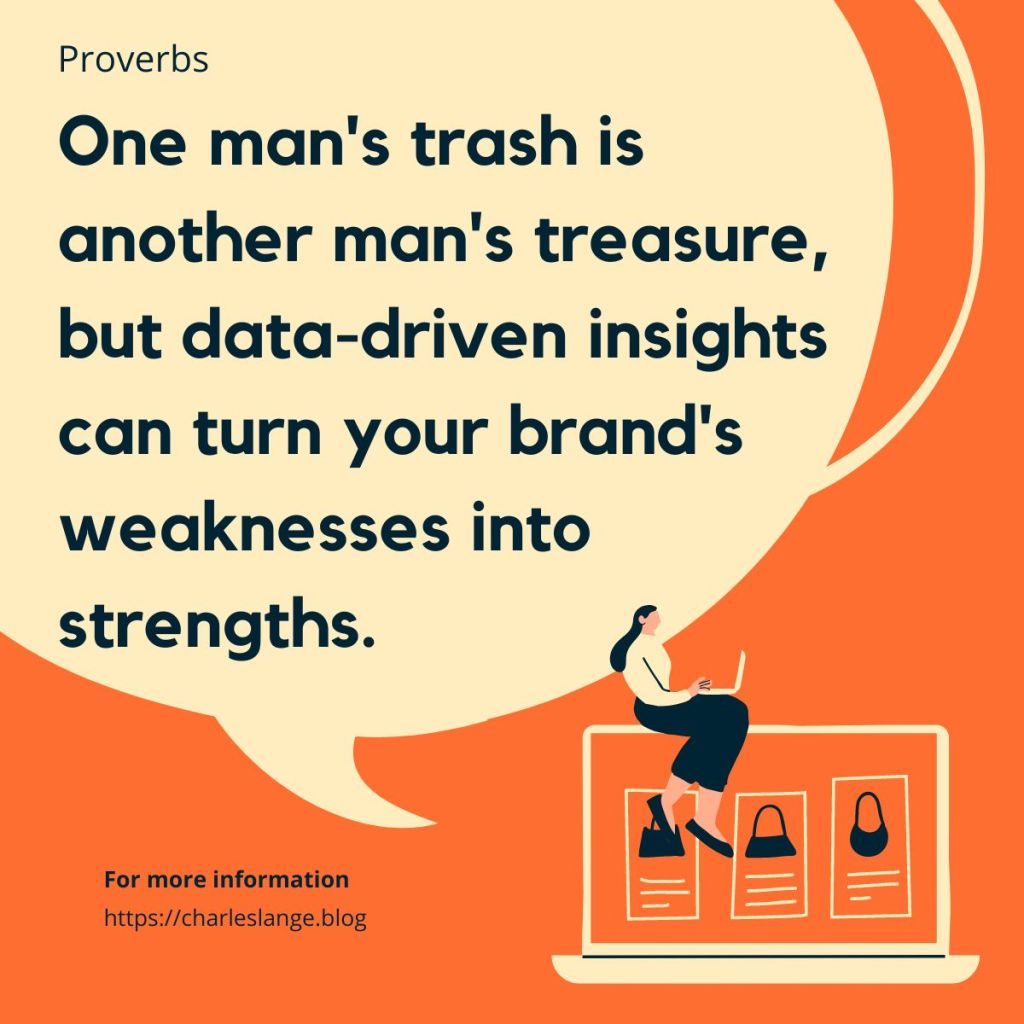
The saying “One man’s trash is another man’s treasure” is often used to describe how something that one person considers worthless may be highly valued by another. In the world of business, this saying can also be applied to brand weaknesses. What one company may see as a weakness, another company may see as an opportunity for improvement. By using data-driven insights, brands can identify their weaknesses, understand the root cause, and turn them into strengths.
Identifying Brand Weaknesses
The first step in turning weaknesses into strengths is identifying what they are. It is essential to know where your brand is falling short so that you can create a plan to address those areas. There are several common weaknesses that brands may face, including poor customer service, weak branding, ineffective marketing, and lack of innovation.
To identify brand weaknesses, companies can use data-driven insights. This can include analyzing customer feedback, monitoring social media, and studying website analytics. By examining this data, companies can gain valuable insights into their customers’ opinions, behaviors, and preferences.
For example, a company may discover that customers are dissatisfied with their website’s user experience. By analyzing website analytics data, the company can identify specific areas that need improvement, such as slow loading times or a confusing layout.
Understanding the Root Cause of Weaknesses
Once a brand has identified its weaknesses, the next step is to understand the root cause. This is critical because it allows companies to address the underlying issues rather than just treating the symptoms.
There are several methods for uncovering the root cause of brand weaknesses, including conducting customer surveys, studying competitor strategies, and analyzing internal processes. For example, a company may conduct a survey asking customers why they are dissatisfied with their product or service. The responses can provide valuable insights into the underlying issues causing customer dissatisfaction.
A case study of a brand that successfully identified the root cause of a weakness is Domino’s Pizza. In 2009, the company faced criticism for the quality of their pizza. Rather than just improving the taste, Domino’s conducted a comprehensive review of its operations and discovered that customers were dissatisfied with the entire ordering and delivery process. The company then implemented a plan to overhaul its operations, resulting in significant improvements in customer satisfaction.
Turning Weaknesses into Strengths
Once a brand has identified the root cause of its weaknesses, the next step is to turn them into strengths. This can be challenging, but with the right strategy, it is possible to transform weaknesses into opportunities.
One strategy for turning weaknesses into strengths is to focus on differentiation. By identifying what sets your brand apart from the competition, you can highlight those strengths and position your brand as a unique and valuable option. For example, a company may differentiate itself from competitors by offering superior customer service or innovative features.
Another strategy is to leverage partnerships. By partnering with other brands or organizations, companies can tap into new markets or gain access to valuable resources. For example, a company may partner with a popular influencer to increase brand awareness among their followers.
A case study of a brand that successfully turned a weakness into a strength is Old Spice. In the early 2000s, the company’s sales were declining as younger consumers were favoring other brands. Rather than accepting this decline, Old Spice launched a new marketing campaign targeted at younger men. The “Smell Like a Man, Man” campaign was a huge success and helped the company increase sales and gain market share.
Measuring the Success of Brand Improvement
Once a brand has implemented strategies to turn weaknesses into strengths, it is important to measure the success of those efforts. This can help companies understand which strategies are working and which ones need to be adjusted.
There are several metrics that companies can use to measure brand improvement, including customer satisfaction scores, customer retention rates, social media engagement, and sales data. By analyzing these metrics, companies can gain insights into the effectiveness of their strategies and make data-driven decisions.
A case study of a brand that successfully measured its brand improvement is Nike.
In the early 2000s, Nike faced criticism for poor labor practices in its overseas factories. The company responded by implementing a comprehensive sustainability plan, which included reducing its carbon footprint and improving working conditions in its factories. To measure the success of these efforts, Nike established a set of sustainability metrics and publicly reported on its progress each year. By doing so, Nike was able to demonstrate its commitment to sustainability and gain the trust of consumers.
Warby Parker – Turning a Lack of Brick-and-Mortar Stores into a Strength
When Warby Parker launched in 2010, the eyewear industry was dominated by a handful of established players with large brick-and-mortar store networks. Warby Parker, however, had no physical stores at all. This was initially seen as a weakness, but the company turned it into a strength by offering customers a unique online shopping experience.
Warby Parker focused on creating a user-friendly website that allowed customers to try on glasses virtually and offered a home try-on program that allowed customers to try on up to five pairs of glasses at home for free. This innovative approach allowed Warby Parker to differentiate itself from competitors and attract a younger, tech-savvy audience.
The company’s online-focused strategy proved successful, and it has since expanded to include physical stores. Today, Warby Parker has over 125 brick-and-mortar locations across the US and Canada, but its online roots remain a key part of its brand identity.
Chobani – Turning a Lack of Brand Recognition into a Strength
When Chobani launched in 2007, Greek yogurt was a niche product with limited market appeal. The company faced a major challenge in competing with established yogurt brands like Yoplait and Dannon that had much higher brand recognition.
Chobani turned this weakness into a strength by focusing on the quality of its product and using word-of-mouth marketing to build brand awareness. The company sourced high-quality ingredients and used a straining process that resulted in a thicker, creamier yogurt with more protein and less sugar than competitors.
Chobani also focused on building relationships with its customers through social media and community outreach. The company used Facebook and Twitter to engage with customers and solicit feedback, and it launched a program to donate yogurt to food banks and other charitable organizations.
These efforts helped Chobani build a loyal following of health-conscious consumers who appreciated the company’s commitment to quality and community. Today, Chobani is the top-selling Greek yogurt brand in the US and has expanded into other categories like plant-based products and coffee creamers. The company’s success shows that even in highly competitive markets, brands can turn their weaknesses into strengths by focusing on product quality, building relationships with customers, and differentiating themselves from competitors.
Conclusion
In conclusion, turning brand weaknesses into strengths is a challenging but essential process for companies looking to stay competitive. By using data-driven insights, brands can identify their weaknesses, understand the root cause, and develop strategies to turn them into opportunities. It is important for companies to measure the success of their efforts and adjust their strategies as needed. With the right approach, companies can turn their weaknesses into strengths and achieve long-term success.

 Marketing Unplugged
Leave a Reply