


What people don’t realize is that web3 isn’t just about fancy jpegs and ‘wen lambo’ comments, it’s about accelerating the revolution started by Satoshi in 2009 with the launch of Bitcoin.
For the first time, people can own their digital identity. Data, one of the worlds most valuable resources, is finally in the hands of those who create it. The monetary benefit they will reap through this ownership will shake the very foundations of web2.
NFTs are new, and are getting the same hate the internet got in the 90s, until slowly, but surely it became an integral part of our life.
If you’re reading this, and are thinking of plunging into web3 and crypto, you’re still very early..

An Introduction to Web3
Web3 refers to the next phase of the Internet.
Web1 was the early days. This was when you had to build your own website and create your own content.
This phase of the Internet was dominated by large companies. Getting something off the ground as a single person or even a small team was practically impossible.
But then came Web 2. This is the phase of the Internet we are currently in. Everything is on a platform. Whether it’s YouTube, Twitter, Meta(aka facebook) or another social media site.
There are a few big problems with private companies controlling these platforms.
==> Free advertising model — the platforms are free but track user data to sell to advertising companies
==> Central database with all user info — one hacker can break in and have data on billions of users
==> Platform first — despite enabling the creator economy, these platforms change on a whim which can destroy a creator’s entire business model
When people talk about building Web3, they’re excited about solving these problems. Web3 platforms will have all the principles of Bitcoin, and allow users to do much more than just send and receive digital cash.
Ethereum will be the blockchain that powers all these different platforms. These platforms will be decentralized, ownerless, and secure.
My favorite example is Uniswap. This is a decentralized cryptocurrency exchange. It allows anyone to trade Cryptocurrency. And all of it works through code. There is no middleman. Just traders and code.
However, Ethereum also enables you to do so much more than just build decentralized platforms.

An Introduction to Cryptocurrency
Cryptocurrency is digital cash. It uses cryptography to keep the system secure.
Bitcoin is a cryptocurrency. I can send you Bitcoin and anyone can see that transaction. Thanks to cryptography, they cannot interfere with it in any way, shape or form.
Additionally, I can’t take my Bitcoin back. Once I send it, it is sent. Bitcoin, and other cryptocurrencies, use something called blockchain to secure data.
You can think of a blockchain as a public ledger. It records every transaction that happens. And it allows anyone to see it. Again, cryptography prevents them from stealing funds or interfering.
The blockchain is secured by a decentralized network of nodes.
OK, what the heck does that mean?
A node is just a participant in the network. There is no central power controlling Bitcoin or other cryptocurrencies.
Bitcoin is the best example of digital cash. It has a sound design that works and will continue to work for the foreseeable future. You can attack nodes in the network, but you cannot shut down Bitcoin as a whole.
However, blockchains can be used for much more than just digital cash. This is where we can talk about Ethereum. Vitalik Buterin, the creator, describes Ethereum as a “general purpose blockchain.”
The goal isn’t for Ethereum to become digital cash. It enables anything to use blockchain technology.
Ethereum is still in its infancy. There are technical details that limit what can be built on top of Ethereum. However, Ethereum gets updated by the community all the time.
One day, it will be powerful enough to bring blockchains to anything and everything. And that is going to change the Internet as we know it.
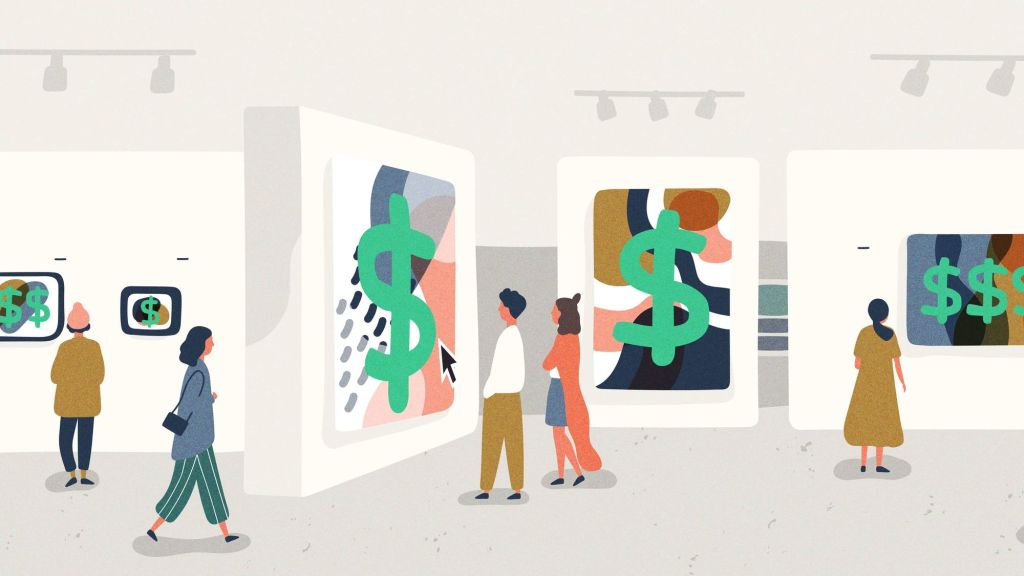
An Introduction to NFTs
One of the most exciting features of Ethereum is the ability to create NFTs. But what exactly are they?
NFT stands for non-fungible token.
NFTs represent digital ownership. The best example is a digital picture. a Jpeg. Let’s say you have an amazing picture. You can create an NFT for it. Then, you can send or sell the NFT.
Right now, they’re only used for digital ownership. However, they can easily be used for physical ownership as well.
One of the most popular NFT projects is the Bored Ape Yacht Club. It’s a collection of 10,000 unique apes. In addition to owning a cool picture, you can get access to an interesting community.
NFTs also play a big part in a new way to organize people.

An Introduction to DAOs
DAO stands for decentralized autonomous organization. It’s nothing more than a way to coordinate individuals to a specific mission.
DAOs are similar to companies. They both organize people toward a mission, generate wealth, and solve society’s problems. But DAOs have many advantages over companies.
==> DAOs have no formal leaders
==> They are community-driven
==> Members have a shared economic interest
Most importantly, DAOs allow for on-chain governance. This means all important decisions come to a vote on the blockchain. The only way to change the outcome of the vote is to sway people‘s opinion before it happens.
DAOs are a powerful way to organize people. They entirely rely on voluntary effort from members. As opposed to companies who use wages and exclude employees from the company’s upside.


 Marketing Unplugged
Leave a Reply